
Key Takeaways
- Take immediate safety concerns seriously, especially injuries, threats, sudden fear, or signs of medical distress.
- Listen carefully to your loved one, document your observations, and preserve relevant records and photographs.
- Report suspected abuse or neglect through appropriate channels, including facility leadership, state agencies, law enforcement, and long-term care advocates when needed.
- Do not assume a nursing home’s explanation resolves the issue. Ask clear questions and request written information.
- Medical and legal options depend on the facts and state law, so timely professional guidance may be important.
Learning that a parent, spouse, relative, or friend may be mistreated in a nursing home can be frightening and overwhelming. Families may notice unexplained bruises, declining hygiene, sudden emotional changes, missing personal items, or a resident who seems afraid to speak when staff members are nearby. While not every injury or health decline proves abuse, concerns should be treated seriously and investigated promptly.
When there is reason to believe poor care, neglect, or intentional harm may have caused an injury, families may need medical guidance as well as answers about accountability. A qualified malpractice lawyer can help evaluate whether available records and circumstances raise legal concerns, but protecting the resident’s health and immediate safety should always come first.
Understand What Nursing Home Abuse And Neglect Can Look Like
Abuse in a nursing home is not limited to physical violence. It can involve harmful conduct by staff members, other residents, visitors, or anyone responsible for the resident’s care. Neglect may occur when a facility fails to provide needed supervision, hygiene, nutrition, medication, mobility assistance, or medical attention.
Possible forms of mistreatment include physical, emotional, sexual, financial, and verbal abuse. Neglect can be intentional or the result of poor staffing, inadequate training, weak supervision, or failures in care planning. Regardless of the cause, a resident who is unsafe or not receiving basic care needs prompt attention.
Common Warning Signs
- Bruises, cuts, burns, fractures, bedsores, or injuries with no clear explanation.
- Repeated falls, wandering incidents, dehydration, weight loss, or untreated infections.
- Unclean clothing, poor hygiene, soiled bedding, or an unsanitary living space.
- Sudden withdrawal, depression, agitation, confusion, or fear around certain people.
- Changes in medication, sedation, or pain levels that are not clearly explained.
- Missing money, jewelry, identification, financial documents, or unexplained account activity.
- Staff members are refusing private visits, giving inconsistent answers, or discouraging questions.
Some residents cannot clearly describe what happened because of dementia, communication limitations, medication effects, or fear of retaliation. Family members should pay attention to patterns, changes in behavior, and details that do not match the facility’s explanation.
Act Quickly If There Is Immediate Danger
If your loved one has a life-threatening injury, appears to be in urgent medical distress, reports an assault, or is in immediate danger, call 911. Ask for emergency medical care when necessary. If possible, avoid leaving the resident alone with anyone you believe may be responsible for causing harm.
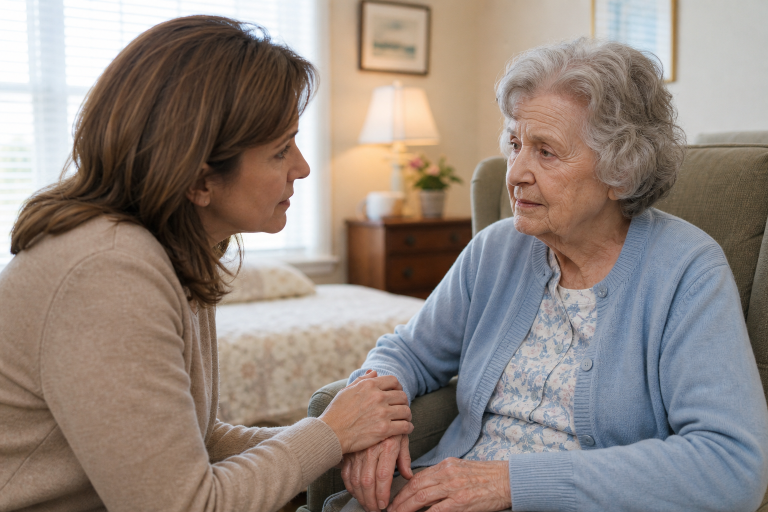
For serious but non-emergency concerns, consider arranging a prompt medical evaluation by an independent physician, emergency department, or another qualified healthcare provider. An outside evaluation may identify injuries, dehydration, infections, medication problems, or other conditions that require treatment. Do not delay urgent care while waiting for the facility to complete an internal review.
Talk With Your Loved One Privately And Respectfully
Choose a calm moment to speak with your loved one away from staff, roommates, and other visitors. Use open-ended questions rather than questions that suggest a specific answer. For example, ask, “Do you feel safe here?” “Has anyone hurt or scared you?” or “Is there anything you need help telling me?”
Listen without pressuring the resident to provide a full account immediately. They may be embarrassed, confused, worried about retaliation, or unsure whether what happened was wrong. Write down their exact words as soon as possible, including the date, time, location, names mentioned, and any details about witnesses.
Document What You See And Preserve Information
Good documentation can help medical providers, investigators, advocates, and legal professionals understand what occurred. Create a written timeline beginning with the first sign of concern. Include dates of visits, injuries, changes in condition, staff explanations, phone calls, hospital trips, and meetings with facility personnel.
- Take clear, dated photographs of visible injuries or unsafe conditions when appropriate.
- Save text messages, emails, voicemails, bills, care plans, discharge paperwork, and incident-related correspondence.
- Record the names and job titles of staff members who provide information or witness an event.
- Request copies of medical records, nursing notes, medication administration records, care plans, and incident reports.
- Keep original documents and avoid editing photographs, recordings, or messages.
Do not secretly record conversations unless you understand the recording-consent laws where you live. Those laws vary by state. Written notes made soon after an event are often useful and can preserve details that may otherwise be forgotten.
Report Suspected Abuse Or Neglect
You can report concerns to the nursing home administrator or director of nursing, but an internal complaint should not be the only step when the allegation is serious. Ask the facility to explain what it will do, who will investigate, and how it will protect the resident while the concern is reviewed. Request a written response when possible.
Families may also report suspected nursing home abuse, unsafe conditions, inadequate staffing, or poor care to the state survey agency, which is generally connected to the state health department. Medicare explains that complaints involving nursing home conditions and resident mistreatment may be directed to the appropriate state survey agency through its complaint guidance.
A Long-Term Care Ombudsman may also be a valuable resource. Ombudsman programs advocate for residents of nursing homes and other long-term care settings, help address complaints, and explain resident rights. The Administration for Community Living provides information about the Long-Term Care Ombudsman Program and its role in responding to problems affecting residents’ health, safety, welfare, and rights.
When To Contact Law Enforcement
Call local law enforcement when you suspect assault, sexual abuse, theft, financial exploitation, threats, or another possible crime. A police report may be especially important when there are serious injuries, missing property, or allegations involving intentional harm. Adult Protective Services may also have a role, depending on the state and the resident’s circumstances.
Ask Direct Questions And Follow Up
When speaking with nursing home management, remain factual and specific. Ask what happened when staff first became aware of the issue, what treatment was provided, whether the incident was documented, and what measures will prevent a repeat occurrence. If the facility claims an injury resulted from a fall or medical condition, ask for the relevant care notes and assessment records.
Continue visiting at different times of day when possible. Observe whether call lights are answered, whether your loved one has access to water and personal items, whether staff communicate respectfully, and whether care needs are being met. Repeated concerns may reveal a pattern that a single visit does not.
Consider Whether A Transfer Is Necessary
A transfer may be appropriate if the resident remains unsafe, if trust has broken down, or if the facility cannot meet the resident’s care needs. However, moving a medically fragile person can create risks. Discuss the decision with the resident’s physician, the care team, family, and any involved advocate. Make sure medications, records, care instructions, and personal belongings move with the resident.
Final Thoughts
Suspected nursing home abuse should never be ignored. Focus first on safety and medical care, then document concerns, report the problem through appropriate channels, and follow up until the issue is addressed. Careful records, prompt action, and informed support can help protect your loved one and clarify the next steps.




Leave a Reply