
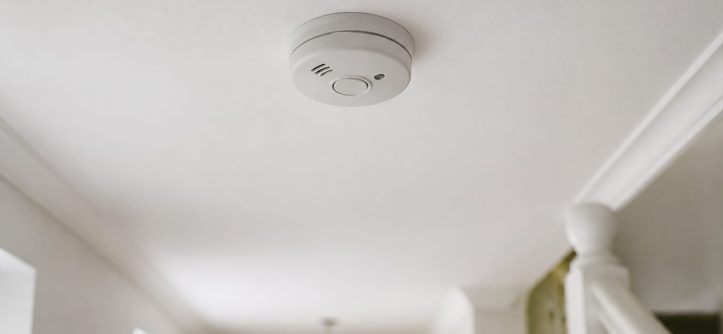
While purchasing a smoke alarm is a relatively easy task, many are not fitted in the correct location. Alarms fitted in the wrong place will either not sound in time to alert others in the event of a fire or will sound so frequently as a result of cooking, i.e. toast being made or the production of steam, that they will be taken down by others in the household.
Fit One on Every Storey
A smoke alarm is needed on every floor of your home, in hallways and on landing areas as well as in bedrooms. This ensures that whatever happens, smoke from a fire will easily reach a smoke alarm. A home with three floors (such as a three storey house or a three storey flat) would need at least three smoke alarms before you consider additional detectors.
Keep Clear of Walls and Lights
When installing ceiling-mounted fire alarms it is essential to allow sufficient air movement around the alarm. For this reason it is recommended that fire alarms are installed at least 300mm away from walls and light fittings and coving. If a fitting needs to be installed near to a wall or to a pendant light then measure out 300mm on the ceiling to establish the best position. There is little point in installing a fire alarm only to find it doesn’t operate effectively due to it being positioned in a poor location.
Use Heat Alarms in the Kitchen
Kitchen fire detection is special because of all the cooking activities that take place in them and the amount of times that a normal smoke detector will go off unnecessarily. In most cases detectors are quickly disconnected by householders because of frequent false alarms. A heat alarm is the ideal fire detection product to be used in kitchens because it is insensitive to cooking fumes and does not activate due to normal cooking activities. However it will detect a fire very quickly and alert people in the kitchen and elsewhere in the home of a potential fire. Bedfordshire Fire and Rescue Service safety advice for kitchens recommends the use of heat detection.
Position Alarms Outside Bedroom Doors
As a minimum a smoke alarm should be placed on the landing outside of every bedroom. In some cases a bedroom may have a particularly deep sleeper or children who shut their doors. It is worth checking that the chosen position of the smoke alarm is loud enough to wake them. In addition, a closed door can muffle the sound of the alarm. See also Fire Alarms Bedfordshire.
Don’t Forget the Living Room
Many fires start with faulty electrical equipment. Most of these occur in living rooms where people leave on standby the countless appliances they have for use around the house. Another common place for these types of fires is within the home’s wiring. Here at Homesafe we have seen an increase in the number of fires recently and many of these have occurred in people’s living rooms. The living room is an area of the home which is often missed when checking the placement of fire alarms throughout a property.
Avoid Dead Air in Corners and Apex Ceilings
The area above the apex of a roof or within corners can form dead air spaces. The best position for a smoke alarm is on a flat section of ceiling as central as possible to the room. Avoid mounting detectors in such locations as the apex of a roof or within the corners of a room as the sensor will be operating outside of the natural travel of the smoke. Local home fire safety advice for smoke alarms is given within home fire safety advice for local households from Central Bedfordshire Council. Information regarding the appropriate placement of fire alarms within homes is also provided within safety guidance for homeowners from Bedford Borough Council.
Interlink Alarms Across the House
In a home with multiple floors, a single fire alarm might not be enough to wake all occupants. This is why it is highly recommended to interlink all fire alarms in a home so that when one alarm detects smoke or heat, all other linked alarms will sound immediately. This can be done wirelessly using radio-frequency linking, or by wiring. For more information on how to make your home safe, read home safety guidance by Bedford Borough Council. Especially for larger homes with older layouts, the way a home is designed can mean that sound of a fire alarm is muffled when travelling between floors with closed doors.
Check Loft Conversions and Integral Garages Separately
You should also include your loft conversion and integral garages in your fire safety measures. It’s easy to forget about them as they are not part of the main house but both can pose large fires and even more so due to the inherent risks associated with them. Your loft conversion should have a smoke alarm on each floor. It may also require compliance with certain parts of the building regulations depending on how your conversion was constructed. Integral garages with mains wiring, stored fuel, etc. require a heat alarm to be positioned outside of the garage and near the door into the house. More information on what is expected for loft conversions and garages that are attached to a house can be found on the Luton Council’s safety guidance for landlords and home owners.
Putting the right alarm in the right place is more important than buying enough of them. And once installed, all fire alarms need to be tested on a monthly basis to ensure they are working correctly and will alert people of a fire in time.



Leave a Reply