
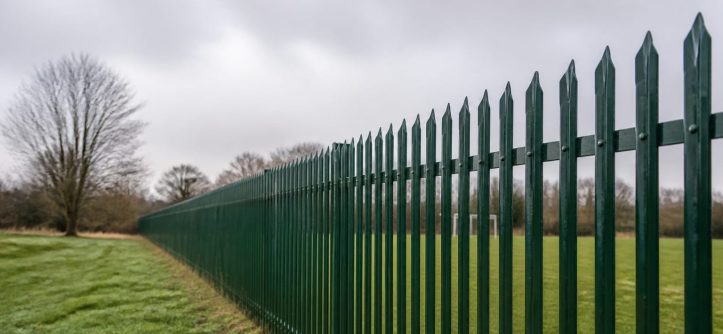
How Long Does Palisade Fencing Last
The great strength of palisade fencing is its tough image, and this is generally correct. However, there are a number of factors which affect the life of the fencing, including the material, the surface finish, and the environment in which it is situated. It is worth understanding these factors before purchasing a fence, and also before deciding whether to repair or replace an existing one.
Galvanised Steel Versus Timber
Galvanised steel fencing is generally considered to last for 25-30 years or more depending on exposure. Timber palisade fencing, on the other hand, can cost less to install initially, but lasts for around 15-20 years before suffering from significant rotting and splitting. If longevity is a priority then steel is likely the better long-term solution but timber palisade is still widely used for domestic boundaries where appearance is paramount.
Why The Finish Matters So Much
The finish of a steel fence is critical as bare steel will start to rust within a short time frame. By hot-dip galvanizing the steel (dipping it in molten zinc) you can protect the steel for many years. However, adding a powder-coated top layer can offer additional protection against scratches and also fading due to exposure to UV. Products made to recognised British Standards for fencing products typically detail dual protection as specified above and therefore it is worth checking the specification before installation to confirm.
Ground Conditions And How It’s Fixed
It’s also worth remembering how the posts are fixed into the ground can have a huge impact on the life of a fence. Ground Conditions play a big part in the life expectancy of a fence. By using Concrete-In Posts, set at least 450mm into the ground within a suitable concrete footing, the most stable and long-lasting form of fencing can be achieved. Sites with clay or waterlogged soils are particularly suited to this type of installation.
Coastal And Industrial Air Speeds Up Corrosion
Salt in the air causes rapid corrosion. Average corrosion rates on inland sites are far greater than those on coastal sites. Exposure to weather and other influences on coastal sites is greater than on most other sites. Data supplied by the Met Office on exposure to coastal weather on land within 1 mile of the sea (or estuary) indicates that fencing on such sites could require replacement some 10 years or so earlier than equivalent fencing on an inland site. Very high corrosion rates are also experienced at industrial sites where there are airborne chemicals, or high humidity, and a heavier galvanised coating, or even marine-grade fixings could provide extra years of service.
Impact Damage From Vehicles And Vandalism
Even the hardest of fencing materials will not withstand impact well. Vandalism or accidents can result in fence pales and posts being damaged. The same problem is also caused by slow-growing vegetation such as ivy and brambles that can penetrate the spaces between the pales of a fence. Eventually the vegetation can enter between the fence pales and, as it grows, it can cause the fence pales to split due to the moisture that enters the space between the pales and the fence posts.
Spotting A Fence Near The End
Rust-through of a fence’s steel components, particularly at the base of the pales and posts, is distinct from surface rusting and is a clear indication that the steel is deteriorating. Pales which are loose or rattling, or have become detached from the fence posts, are a sign that the fixings have corroded. Leaning fence posts are another indicator of structural failure and again should be treated with serious consideration. If a fence is used as part of a site’s security measures then even slight leaning or gaps between pales or posts could be considered a hazard and be viewed as a potential breach of site security and safety policies as outlined in the HSE’s security guidance.
Repair Or Replace
In most cases it is cost effective to replace individual panels and posts rather than the whole fence, but as with most things there is a point at which it ceases to become cost effective and the rest of the fence will deteriorate within a year or so. Prior to a complete replacement of a perimeter fence it is wise to check with local planning and boundary regulations as the height and positioning of a new fence could be restricted particularly if near to a highway or shared boundary.
Generally, palisade fencing is easy to spot failing. An annual inspection round the fence will highlight any problems such as rust, loose fixings or leaning posts. These can all be repaired to keep the fence going for another year or so before possibly needing to be fully replaced.



Leave a Reply