
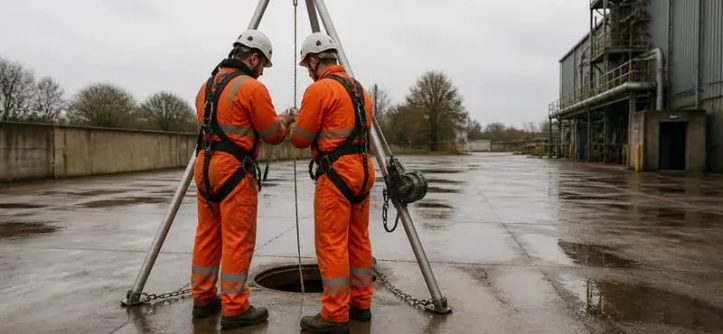
Movement of casualties is paramount to saving lives. The way in which casualties are extracted from confined spaces is just as important as the previous steps to ensure a safe rescue.
Try Non-Entry Retrieval First
The non-entry retrieval of a casualty who is already attached to a harness and line with a fixed end is the fastest and most effective form of extraction. This line and anchor point should be set up prior to entry, not as part of the rescue.
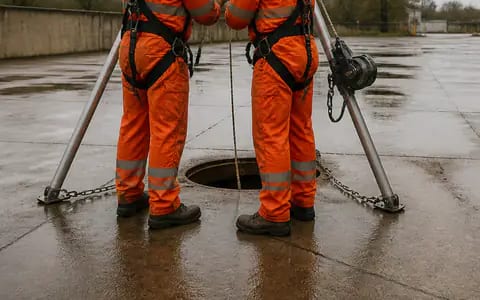
Use a Tripod for Vertical Shafts
For shafts, tanks and manholes rescuers use tripods set up over the point of entry, winches and mechanical advantage to slowly lift the weight of the casualty in a controlled manner. The same rigging allows for the rescuer to be lowered into the space as required.
Manage Rope Through Tight Tunnels
Rope drag or friction within crawlways is often experienced during horizontal extractions. Use edge rollers or padding at bends where possible and have a second line prepared for the out-going team to take over as necessary to ease the casualty through rather than pull against resistance.
Match the Stretcher to the Space
A flexible SKED-type wrap stretcher is ideal for passing a casualty through narrow tunnels in awkward positions, whilst a rigid basket stretcher is best suited for vertical lifts where the casualty can be lifted straight up and kept in a stable and level position. See also Ago Fire.
Protect the Airway and Spine
Whether the casualty is to be carried, pulled or lifted, the rescuer(s) must attempt to maintain control of the casualty’s head and neck. This can be by manual means where space permits, or by the means of the stretcher or wrap being used to maintain the casualty’s spine in a neutral position throughout the carry.
Plan the Exit Route Before Entry
Agree the best route for extraction of the casualty before entry. Ensure all rescuers know which way the stretcher is to travel, where turns are to be made and where the casualty will be extracted to.
These are a number of the extraction techniques that are taught as part of nationally recognised technical rescue training across the UK ensuring that those that are expected to respond in such an emergency are competent to carry out confined space extraction in a safe manner.
Getting these 6 points right forms the basis of extraction that forms the main part of the job and is straight forward.



Leave a Reply