
What Drain Jetting Actually Involves
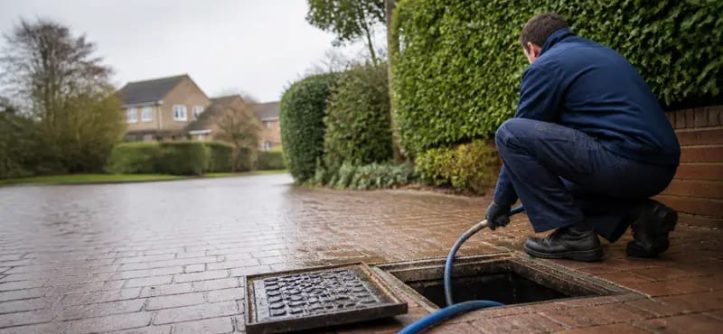
There is much focus placed on the force of water flowing down a drain when talking about drain jetting. Most people have an understanding of how drain jetting works. A flexible hose is connected to a drain jetting unit with a specially designed nozzle at the end. High pressure water is then pumped down the hose and out of the nozzle, along the inside of the pipe. Grease, silt, scale and roots are all stripped from the inside of the pipe walls and then washes away down the pipe to a manhole or outfall where they are removed.
Why Pipe Material Changes The Answer
Casting material such as cast iron and modern plastic drainpipes (uPVC, ABS, etc.) are able to withstand high pressure water jetting, whilst older clay pipes may present a greater risk of damage, should they be affected by age related cracking, etc. A inexperienced operator may treat all pipe types in the same manner and as such cause significant damage to older clay drainpipes.
The Real Risks With Fragile Pipework
A hairline crack in a pipe can be widened by the high pressure water. Loose joints, often found in old clay pipes, can be further loosened and cause small leaks to become larger problems. Collapsed pipes, only partially collapsed, can have further damage done by the high pressure water and debris pushed into the collapse. This type of damage is not normally encountered with healthy pipes and occurs when a pipe is already defective in some way prior to the cleaning with a hose.
Nozzle Choice Matters As Much As Pressure
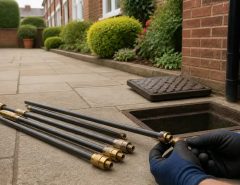
Also of great importance is the selection of the appropriate nozzle, for whilst a flushing nozzle is a gentle and is suitable for general cleansing of debris down a drain and the propulsion of such debris along the drain, a rotary or root-cutting nozzle is very aggressive and is designed to cut through tree roots and other hard material such as scale etc. It is generally not advised to use such nozzles on poor jointed pipes or cracked pipes as the jet of water can further erode the weak area.
Domestic Flush Versus Industrial Jetting
A normal clean of a domestic drain would be carried out using the highest pressure possible using a normal flushing nozzle, to re-clean the pipes and stop grease and scale building up again. Larger premises, such as shops, offices, flats etc and longer drain runs, which could serve a row of houses etc, would require Industrial Jetting. This would be used at higher pressures and with greater flow rates to deal with more serious blockages that could occur in larger drainage systems. High pressure Industrial Jetting used on old clay pipes would be likely to cause damage.
Why A Quick Camera Check Helps First
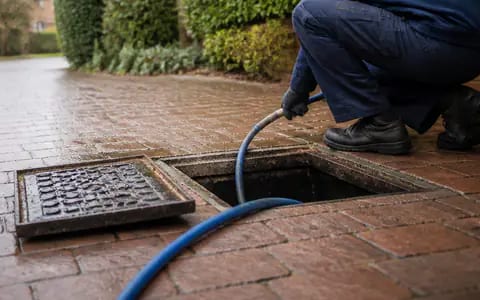
For simple clean outs a quick check with a camera to establish the pipe material, age and condition is often sufficient. From this simple survey, the appropriate pressure and nozzle can be selected to safely clean the pipe. A risk-based approach to sewer maintenance, as detailed in national standards for the maintenance of sewer networks, would recommend such an approach.
Drain Jetting is covered in more detail at Wilkinson Environmental now part of Ipsum Water.
What A Careful Operator Does Differently
To maintain sewer networks in a safe and effective manner, operators should start jetting at a low pressure and increase gradually to the highest pressure required to clear the sewer. Operators should also be aware of surface joints and other features near to the surface of the ground and take appropriate measures to protect them from damage. Nozzles should be kept in constant motion to prevent local damage and operators should cease use immediately should they encounter any unusual resistance or should water recirculate back through the hose.
While risk does exist with the use of drain jetting, it is related to how drain jetting is carried out, rather than the method itself. Used thoughtfully on the correct pipes at the correct pressure, drain jetting is one of the safest and most effective ways to clear a drain.



Leave a Reply