
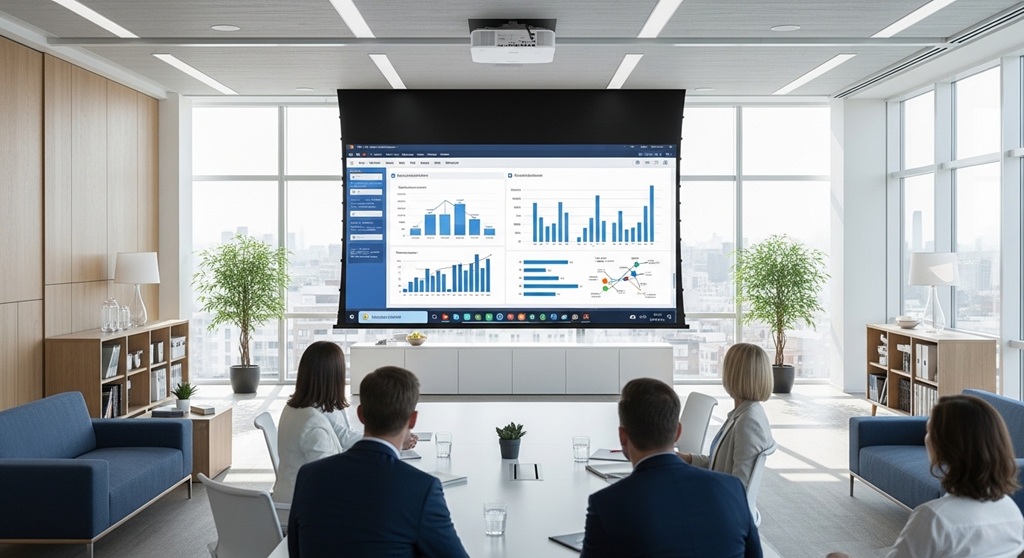
Choosing the right projector screen for your office is crucial when you’re dealing with bright environments. Whether you’re presenting in a conference room, training session, or corporate meeting, a good projector screen can make or break the clarity and quality of your display. The challenge? Dealing with ambient light. In bright office environments, light can distort the projected image, leading to washed-out colors and reduced contrast. But fear not! With the right type of screen, you can still enjoy vibrant, sharp images regardless of the lighting situation.
In this guide, we’ll walk you through how to choose the best projector screens for bright office environments, focusing on ambient light rejecting screens, high gain screens, and other essential factors. By the end of this article, you’ll be able to make an informed decision that will elevate your presentations and meetings. Let’s get started!
What are Ambient Light Rejecting (ALR) Projector Screens?
Ambient light rejecting (ALR) projector screens are specially designed to enhance picture quality by minimizing the effects of ambient light on your projected image. These screens are ideal for bright office environments where natural light or artificial lighting often interferes with the clarity of the display. ALR screens use special optical coatings or layers that reflect light from the projector while rejecting or absorbing ambient light from other sources.
Unlike traditional white or grey screens, ALR screens are engineered to work in environments where standard projector screens might struggle. They provide better contrast, deeper blacks, and more vibrant colors by combating light interference. If your office has large windows or overhead lights that can’t be dimmed, an ALR screen is your best bet for a quality viewing experience.
Why are ALR Screens Crucial in Bright Office Environments?
In a bright office environment, natural light or fluorescent lights can wash out the projected image, making it hard to see details, text, or vibrant colors. The problem arises from the scattering of light in the room, which can reduce the contrast ratio between the projector and the screen. ALR screens solve this problem by filtering out the unwanted ambient light and reflecting only the light coming directly from the projector. This results in a much clearer and brighter image, even in well-lit rooms.
What is the Role of High Gain Projector Screens in Bright Office Settings?
High gain projector screens have a special coating that reflects more light back toward the viewer. The “gain” of a projector screen refers to its ability to reflect light, and the higher the gain, the more light is reflected. A high gain screen typically provides a brighter image, which is especially helpful in bright office environments where ambient light can diminish the brightness of the projected content.
However, it’s important to understand that high gain screens come with their own set of trade-offs. They often narrow the viewing angle and can cause image distortion if viewed from an angle. Additionally, high gain screens may increase the sharpness of the image but can sometimes compromise black levels, making dark scenes appear less defined.
How to Choose Between ALR and High Gain Screens?
The decision between ALR and high gain screens largely depends on the nature of your office and how the screen will be used:
- ALR Screens: Best suited for offices with lots of ambient light that cannot be controlled. ALR screens are great for improving contrast, color vibrancy, and black levels, making them ideal for professional settings.
- High Gain Screens: Perfect for environments where the projector is relatively dim or the viewing distance is long. High gain screens are excellent for projecting a bright image over a large area, but they perform best in rooms where you have some control over the lighting.
If your office is filled with ambient light from windows or overhead lights that cannot be dimmed, an ALR screen is a superior choice. But if you have control over the lighting and need to project over long distances or in large rooms, a high gain screen can provide the extra brightness you need.
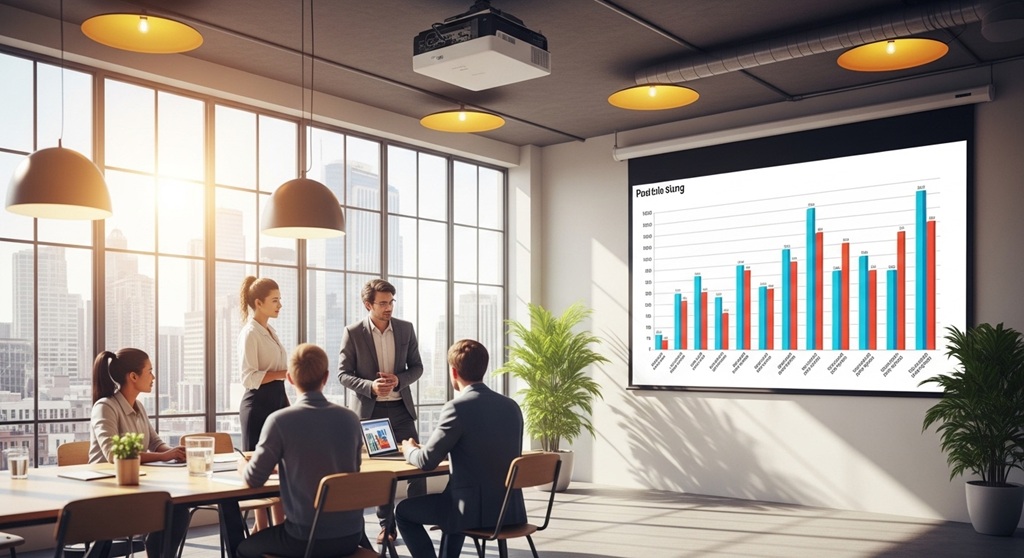
What are the Key Factors to Consider When Choosing a Projector Screen for a Bright Office?
When selecting a projector screen for your office, you should consider several factors beyond just ambient light rejection or gain. Here’s a breakdown of the key aspects you should keep in mind:
1. Screen Size
Choosing the right screen size is critical. It should be large enough to be visible from anywhere in the room but not so large that it overwhelms the space. As a general rule, measure the distance between the projector and the screen, then choose a screen size that complements the room’s layout and the projector’s capabilities.
2. Viewing Angle
Not all projector screens offer the same viewing angle. High gain screens tend to have a narrower viewing angle, which can result in a dimmer image when viewed from the side. If your office space requires multiple people to view the screen from different angles, you’ll want a screen that provides a wide viewing angle for better consistency and image quality from all parts of the room.
3. Screen Material
The material of the screen plays a significant role in the quality of the projection. F
4. Room Layout
The layout of your office and the placement of your projector also affect the type of screen you choose. For instance, if your projector is mounted on the ceiling, you might need a motorized or fixed-frame screen that can be easily lowered. In offices with limited space, a portable screen might be the best solution.
5. Budget
Budget considerations are always important. While ALR and high gain screens tend to be more expensive than standard white screens, they offer enhanced performance that’s worth the investment for bright office environments. Be sure to balance your needs with the budget available to choose the best screen for your office’s specific requirements.
How Can You Ensure the Best Projection Quality in a Bright Office Environment?
In addition to choosing the right projector screen, there are several other factors to consider to ensure the best projection quality in a bright office environment:
- Control ambient light: Whenever possible, try to reduce ambient light in the room by using shades or curtains. Dimming the lights or adjusting the blinds can have a significant impact on the image quality.
- Use a high-quality projector: Invest in a projector that has a high lumen output, especially if you’re working in a brightly lit room. The higher the lumen count, the brighter your image will appear, even with some ambient light.
- Regular maintenance: Regularly clean the screen and projector to maintain optimal performance. Dust and dirt can degrade image quality over time.
Conclusion
Choosing the right projector screen for a bright office environment requires careful consideration of your office layout, lighting conditions, and viewing needs. Whether you opt for an ambient light rejecting (ALR) screen to combat light interference or a high gain screen to brighten up your projection, the right choice will significantly enhance your viewing experience. Don’t overlook the importance of room layout, screen size, and material, as these factors will also impact your projection quality.
If you’re ready to invest in a projector screen that can perform in bright office settings, start by assessing the level of ambient light in your room and consider whether you need an ALR or high gain screen. The right screen will ensure crisp, clear, and vibrant presentations that keep your audience engaged.
Call to Action: Explore our range of ALR and high gain projector screens today and choose the perfect fit for your office. Don’t let ambient light dim your presentations—invest in a screen that works for you!
FAQ
What is the difference between ALR and regular projector screens?
ALR screens are designed to reject ambient light, enhancing contrast and clarity in bright environments. Regular screens lack this capability and may show washed-out images in rooms with high ambient light.
Can high gain screens cause image distortion?
Yes, high gain screens can narrow the viewing angle and may cause image distortion when viewed from the side. They are ideal for larger rooms with controlled lighting but might not be the best choice for smaller spaces.
Are ALR screens suitable for all types of projectors?
ALR screens are compatible with most projectors, but they work best with projectors that have high brightness. Projectors with lower brightness may not produce the desired effect on an ALR screen.
Can I use an ALR screen in a dark room?
While ALR screens excel in bright rooms, they can also work in darker environments, though their benefits may not be as noticeable. In dark rooms, a standard projector screen can often perform just as well.
How do I choose the right projector screen size for my office?
Typically, a screen size between 80-120 inches works for most office settings.
Are there any budget-friendly ALR or high gain screens available?
Yes, there are budget-friendly options for both ALR and high gain screens. However, keep in mind that premium models often offer superior image quality, durability, and additional features that justify their price.
Can I install an ALR screen myself?
Yes, many ALR screens come with easy-to-follow installation instructions and can be installed by the user. However, if you’re opting for a larger, more complex setup, it may be worth hiring a professional installer.
Read More Also: Engaging Millennials with Innovative Digital Campaigns
Find out: What are the Advantages of Timber Frame Kits?




Leave a Reply