
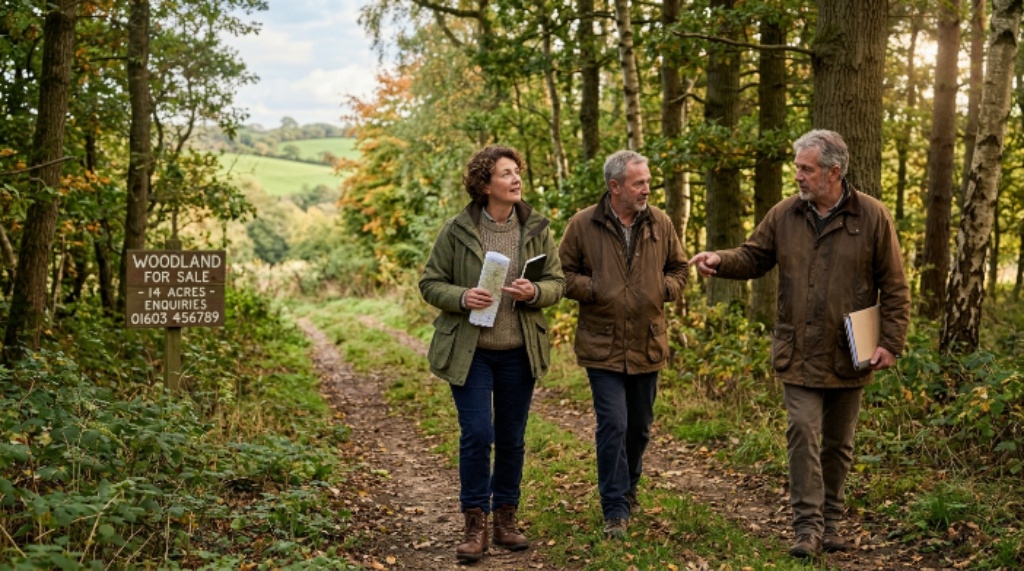
Most people think of property investment as houses, flats, or perhaps commercial buildings. However, there is an entirely different market running quietly alongside all of that. It does not make the front pages of property supplements. Estate agents rarely specialise in it. Yet it attracts a growing number of buyers who want something that bricks and mortar simply cannot offer: land they can walk on, listen to, breathe in, and use entirely on their own terms.
This is the world of UK recreational land. It is a market that rewards curiosity, patience, and a willingness to look beyond the obvious. This guide explains what it is, what it costs, what you can do with it, and how the tax rules work in 2026.
What Recreational Land Actually Means
Recreational land covers any parcel of ground used primarily for leisure rather than farming or development. The term is broad by design. It includes woodland plots, fishing lakes, fields used for shooting or riding, camping and glamping sites, nature reserves, and open countryside parcels used simply as private retreats.
As of 2026, there are more than 670 recreational land listings across the UK on specialist platforms at any given time. These range from a single acre of Scottish Highland grazing to multi-hundred-acre shooting estates in England. The variety is remarkable. So is the range of buyer motivations.
Some buyers want a place to take their children and build a relationship with nature. Others see an income opportunity in glamping pods or fishing permits. Many simply want an asset that is tangible, uncorrelated with the stock market, and genuinely theirs.
The Main Types of Recreational Land Available
Understanding the categories helps buyers focus on what suits their goals.
| Land Type | Typical Use | Price Range Per Acre |
| Amenity woodland | Wildlife, walking, foraging, quiet recreation | £3,000 to £15,000 |
| Commercial woodland | Timber production, carbon credits, shooting | £5,000 to £20,000+ |
| Fishing lakes | Angling, nature, holiday lets | Highly variable |
| Paddocks and grazing land | Horse keeping, camping, small leisure use | £8,000 to £30,000 |
| Open fields | Shooting, events, nature recovery | £3,000 to £12,000 |
| Highland and moorland | Stalking, walking, wilderness retreats | £1,500 to £5,000 |
Woodland is the most actively traded category. Prices average around £5,838 per acre nationally according to current listings data, though small amenity plots of under five acres often command between £12,000 and £25,000 per acre due to higher lifestyle demand and limited supply. Larger commercial blocks tend to cost less per acre but attract a different type of buyer who may need to consult a corporate accountant on how to fix retained earnings after managing significant timber harvest yields.
Regional variation is significant. Northern Ireland offers the lowest average land prices in the UK, sitting around £2,358 per acre. Scotland offers large recreational parcels at relatively low per-acre cost, particularly in the Highlands. South-east England commands a premium for anything within reasonable reach of London.
What You Can Do With Recreational Land
This is the question most new buyers underestimate. The answer is broader than most expect, but it comes with boundaries.
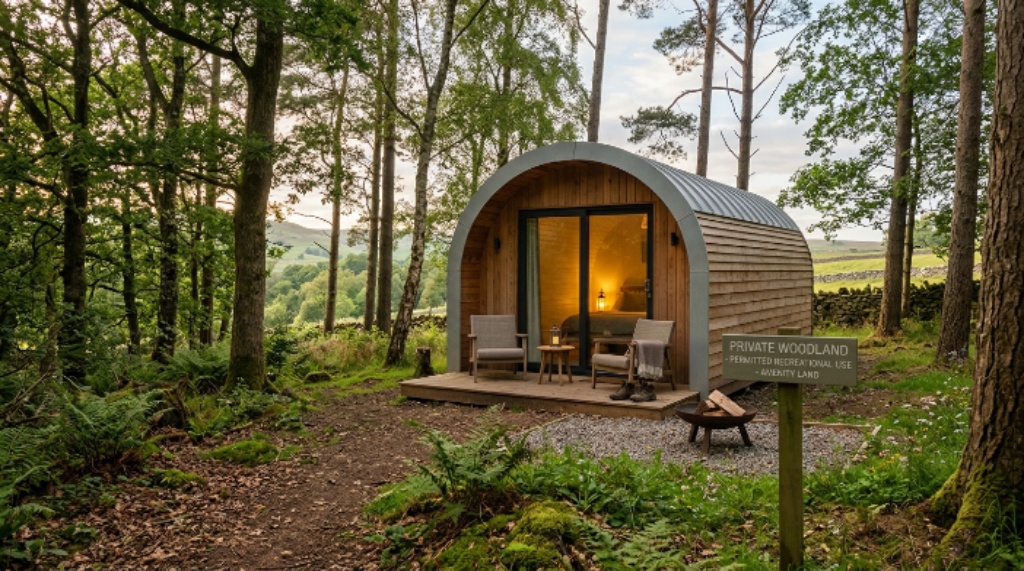
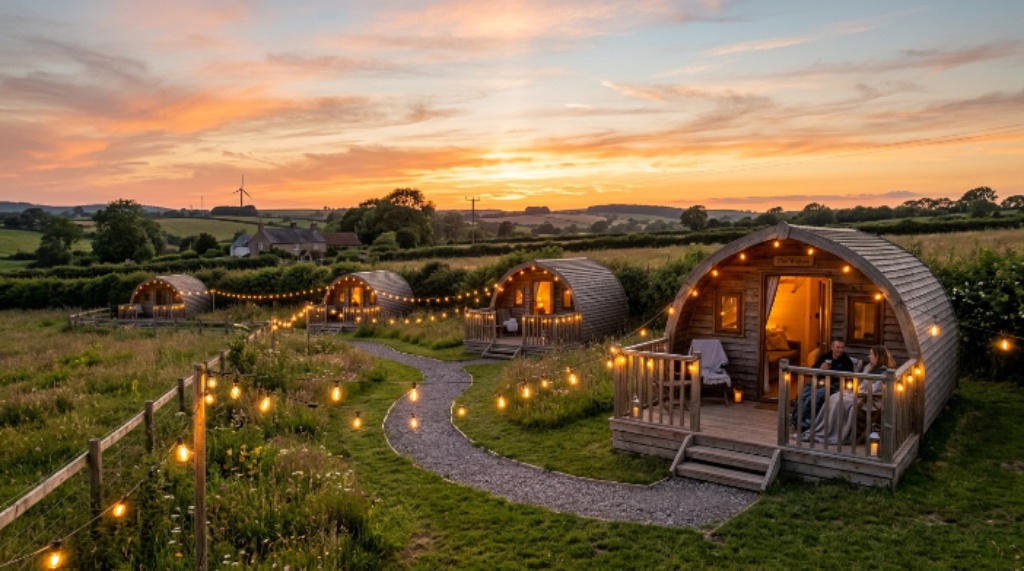
Planning rules govern what can be built on recreational land. However, quite a lot is permitted without formal planning permission at all. Under UK permitted development rules, you can camp on your own land for up to 28 days per calendar year without needing consent. This applies to tents, yurts, shepherd’s huts, and glamping pods, provided they stay genuinely temporary, and no permanent utilities connect them to the land. Exceeding 28 days requires planning permission for a change of use.
Beyond camping, woodland owners can:
- Manage trees, carry out coppicing, and harvest timber without planning permission in most cases, though a felling licence from the Forestry Commission may be required
- Create footpaths, clearings, ponds, and wildlife habitats
- Host private recreational events such as shooting days, fishing days, or foraging workshops
- Run commercial glamping or outdoor education businesses with the appropriate permissions
- Apply for Forestry Commission grants to support planting, management, or nature recovery work
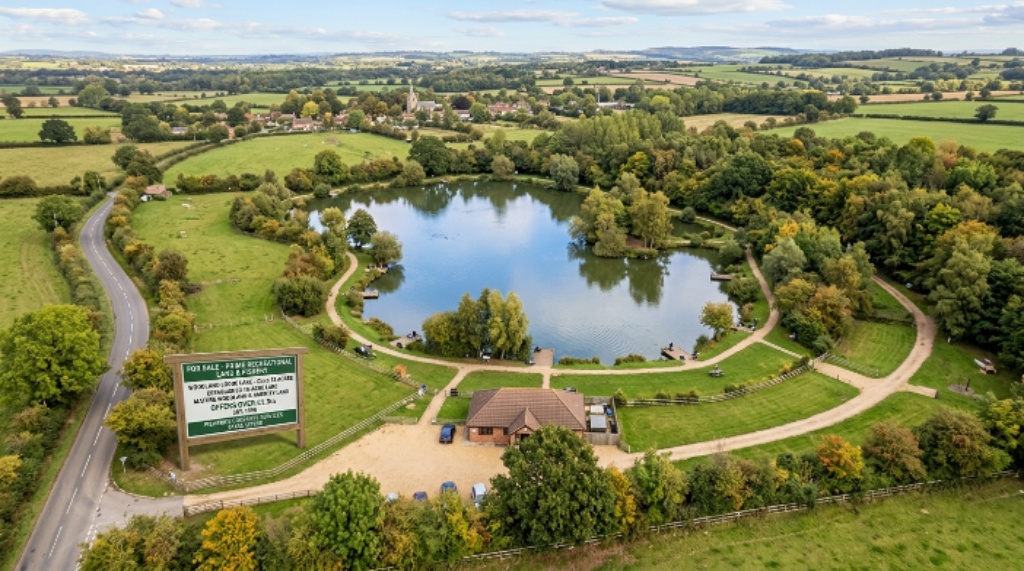
Fishing lake owners can sell permits, run commercial angling sessions, and in some cases develop waterside facilities. A five-acre fishing lake in Lincolnshire recently sold for £975,000, giving a sense of what established commercial lakes command.
The key principle is this: the more clearly a use supports recreation on the land, the more likely planning permission becomes attainable if you need it.
The Tax Picture in 2026
The tax treatment of recreational land changed in April 2026, and buyers need to understand the new rules before purchasing.
Agricultural Property Relief (APR) and Business Property Relief (BPR) have historically allowed qualifying landowners to pass on land free of inheritance tax. From 6 April 2026, both reliefs operate differently. The first £1 million of qualifying assets still receives 100 percent relief. Above that threshold, only 50 percent relief applies. The effective inheritance tax rate on the excess is therefore 20 percent, since the 40 percent standard rate applies to only half the remaining value.
For woodland specifically, the rules depend on how the land is used. Amenity woodland, kept for personal enjoyment without commercial activity, does not qualify for APR. It may still qualify for BPR if it is run as a business with a genuine profit motive. Commercial woodland used for timber production, game shoots, carbon credit generation, or paid glamping can qualify for BPR, though this requires genuine commercial management and evidence of a profit-seeking enterprise.
The income tax position is more straightforward. Profits from commercially managed woodland remain exempt from income tax and corporation tax. Bare land without income generates no income tax liability.
Capital gains tax applies when recreational land is sold at a profit. The land element and any timber value may be treated differently, so professional advice before selling is always worthwhile.
One further point: bare woodland carries no council tax liability. There is no domestic rates charge on land that has no residential structure. Temporary camping structures that remain genuinely temporary also avoid council tax. This makes land cheaper to hold than most residential or commercial property.
Who Is Buying Recreational Land and Why
The post-pandemic surge in land buying has not entirely faded. Interest in rural space, personal wellbeing, and outdoor living continues to push demand beyond what supply can easily meet. However, the buyer profile has broadened considerably.
In 2026, recreational land buyers fall into several broad groups:
- Lifestyle buyers seeking a private outdoor space for family use, nature connection, or personal wellbeing
- Income seekers who plan to monetise through glamping, fishing permits, camping, events, or forest school programmes
- Environmental investors who want to support biodiversity, rewilding, or carbon sequestration through woodland creation
- Portfolio diversifiers who see land as a tangible, low-correlation asset that sits outside of equity and bond markets
- Estate planners looking at land within a broader strategy for passing wealth to the next generation tax-efficiently
The market also attracts buyers who simply want to own a piece of the countryside with no particular plan. That is entirely valid. Land does not depreciate in the way a building does. It does not need maintenance cycles, boiler replacements, or tenant management. For many buyers, that simplicity is the point.
Practical Steps Before You Buy
Rushing into a land purchase is one of the most common mistakes new buyers make. The following steps protect your interests.
- Check access rights carefully. Legal, maintainable access to the land is essential. Goodwill arrangements with neighbouring landowners can break down and become expensive disputes.
- Commission a legal title check. Identify any covenants, rights of way, or restrictions that limit how the land can be used.
- Verify the planning history. Has the land had previous applications refused? Are there designations such as green belt, Area of Outstanding Natural Beauty, or Site of Special Scientific Interest that constrain future use?
- Understand the flood risk. Woodland and field parcels in river valleys can be subject to regular flooding. Check Environment Agency flood maps before committing.
- Consider management costs. Woodland in particular may require ongoing felling licence applications, deer management, and path maintenance.
- Take specialist tax advice. The April 2026 BPR and APR changes mean that inheritance tax planning for land purchases is more nuanced than it was before.
Conclusion
UK recreational land is a genuine, active, and growing market that most mainstream property investors overlook entirely. Prices range from a few thousand pounds per acre for remote moorland to over £25,000 per acre for small, well-positioned amenity woodland plots near population centres. The uses are varied, from private retreats and camping to commercial glamping, fishing, and nature recovery. The tax position changed in April 2026, with BPR and APR now capped at 100 percent relief on the first £1 million of qualifying assets, making professional advice more important than before. Buyers range from lifestyle seekers and income investors to environmental landowners and estate planners. The market rewards preparation, local knowledge, and a clear understanding of what you want from the land. For those willing to look beyond conventional property, it offers something genuinely different.
Frequently Asked Questions
What counts as recreational land in the UK?
Recreational land is any parcel of ground used primarily for leisure rather than farming or development. It includes woodland plots, fishing lakes, paddocks, shooting fields, open countryside parcels, and sites used for camping, glamping, or nature-based activities. There are currently more than 670 active listings for recreational land across the UK.
How much does recreational land cost per acre in the UK?
Prices vary significantly by land type and location. Amenity woodland typically ranges from £3,000 to £15,000 per acre. Small amenity plots under five acres often command £12,000 to £25,000 per acre due to lifestyle demand. Paddocks range from £8,000 to £30,000 per acre. Highland and moorland can fall below £2,000 per acre in some parts of Scotland and Northern Ireland.
Can I camp or build on recreational land I own?
You can camp on your own land for up to 28 days per calendar year without planning permission, provided structures remain genuinely temporary and connect to no permanent utilities. Beyond 28 days, planning permission is required. Building permanent structures also requires consent. Planning permission for buildings that support recreational use is generally more attainable than residential development consent.
What are the inheritance tax rules for recreational land in 2026?
From 6 April 2026, Business Property Relief and Agricultural Property Relief both changed. The first £1 million of qualifying land assets still receives 100 percent relief from inheritance tax. Above that threshold, only 50 percent relief applies. Commercially managed woodland and land run as a genuine business can qualify for BPR. Amenity woodland used purely for personal enjoyment typically does not qualify for APR.
Do I pay council tax or income tax on recreational land?
Bare recreational land with no residential structure carries no council tax liability. Profits from commercially managed woodland are exempt from income tax and corporation tax under a long-standing relief. Temporary camping structures that are genuinely mobile and removed after the permitted period also avoid council tax. Capital gains tax applies when the land is sold at a profit.



Leave a Reply