
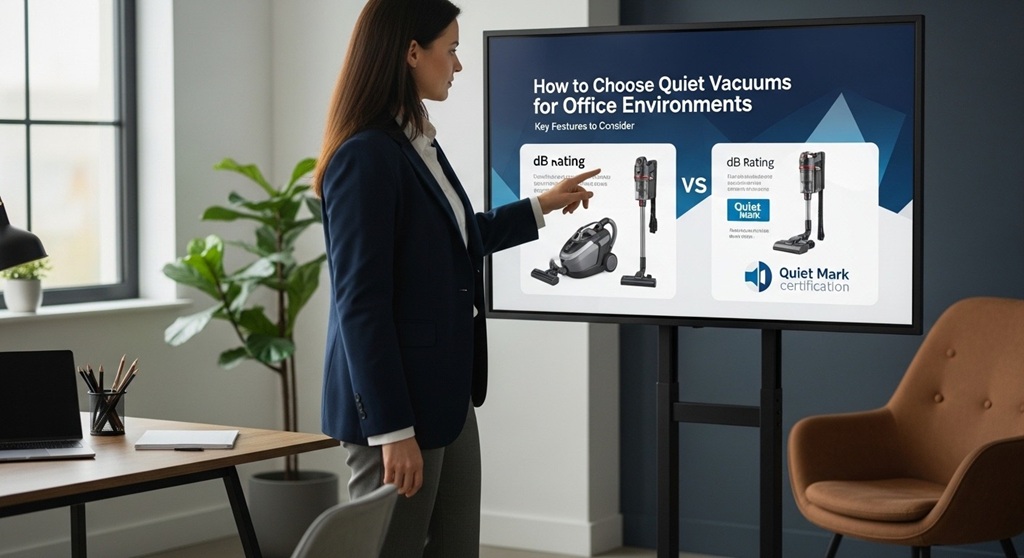
Imagine trying to concentrate on a report while a loud vacuum roars across the hallway. The distraction breaks focus, interrupts calls, and lowers productivity. In busy workplaces, cleaning noise can quickly become a serious issue.
That’s why many businesses are switching to low noise vacuum cleaners designed specifically for workplaces. These machines reduce sound while maintaining strong suction power, making them ideal office friendly vacuum solutions.
A silent cleaning equipment system usually operates between 50–65 decibels, which is roughly the noise level of normal conversation. Traditional vacuum cleaners can exceed 75–80 decibels, creating noticeable disruption in offices, coworking spaces, and meeting areas.
According to research from the European Agency for Safety and Health at Work, prolonged workplace noise above 70 dB can negatively impact employee concentration and stress levels. This makes quiet cleaning equipment not just convenient—but necessary for modern offices.
This guide explains how to choose the right low noise vacuum cleaner for office environments. You’ll learn what noise level to target, what features matter most, and how businesses successfully use silent cleaning equipment to maintain cleanliness without interrupting work.
Whether you manage a corporate office, coworking hub, clinic, or educational facility, this guide will help you select an office friendly vacuum that keeps your workspace clean and productive.
Why Do Offices Need Low Noise Vacuum Cleaners?
Short answer: Offices need low noise vacuum cleaners because loud cleaning equipment disrupts productivity, meetings, phone calls, and employee focus.
Most workplaces operate in environments where concentration is critical. Sales teams make calls. Managers conduct meetings. Designers focus on detailed work. Excessive noise from cleaning equipment can interrupt all of these activities.
Traditional vacuums often operate at 75–85 dB. That sound level is similar to heavy traffic. When cleaning occurs during office hours, it becomes a noticeable distraction.
The Productivity Problem
Noise interruptions can reduce workplace efficiency. A University of California Irvine study found that workers take an average of 23 minutes to regain focus after interruptions. Even short bursts of loud vacuum noise can disrupt deep work.
The Employee Experience Factor
Quiet workplaces support better employee satisfaction. Organizations investing in silent cleaning equipment often see improvements in:
- Employee concentration
- Meeting quality
- Call clarity
- Workplace comfort
Cleaning During Office Hours
Many offices now clean during working hours instead of overnight. This reduces operational costs and improves security. However, daytime cleaning only works if equipment is quiet.
That’s where office friendly vacuum machines become essential.
What Noise Level Is Considered Quiet for a Vacuum Cleaner?
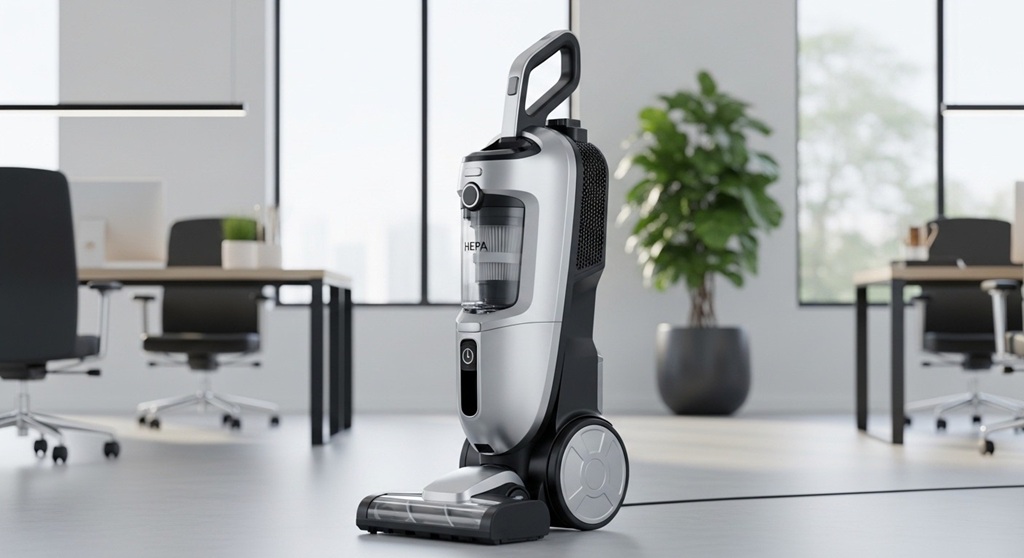
Short answer: A quiet vacuum cleaner typically operates between 50–65 decibels, making it suitable for office environments.
Noise levels are measured using the decibel (dB) scale. The lower the number, the quieter the machine.
| Noise Level (dB) | Example Sound | Suitability for Offices |
|---|---|---|
| 50–55 dB | Quiet conversation | Excellent for office cleaning |
| 56–65 dB | Normal speech | Ideal office friendly vacuum range |
| 66–75 dB | Busy traffic | Moderate disruption |
| 76–85 dB | Traditional vacuum cleaner | Too loud for offices |
Most low noise vacuum cleaners designed for commercial environments stay below 65 dB. At this level, employees can continue working while cleaning takes place.
What Features Should You Look for in an Office Friendly Vacuum?
Short answer: The best office vacuum cleaners combine low noise operation, strong suction, energy efficiency, and ergonomic design.
When selecting silent cleaning equipment, noise level is only one factor. Several features determine whether a vacuum is truly suitable for workplace environments.
1. Low Noise Motor Technology
Modern vacuums use advanced motor insulation and airflow systems to reduce noise.
Look for models labeled:
- Low noise vacuum cleaner
- Quiet commercial vacuum
- Silent cleaning equipment
2. HEPA Filtration
Office environments accumulate dust, allergens, and particles from carpets and flooring.
A HEPA filter captures up to 99.97% of particles as small as 0.3 microns. This improves indoor air quality and supports healthier workplaces.
3. Lightweight and Ergonomic Design
Cleaning staff often vacuum large office spaces. A lightweight design reduces fatigue and improves productivity.
Important ergonomic features include:
- Adjustable handles
- Smooth rolling wheels
- Balanced weight distribution
4. Energy Efficiency
Energy-efficient vacuums reduce operational costs for businesses. Many modern office vacuums use 500–900 watt motors while maintaining strong suction.
5. Large Dust Capacity
Large office areas require longer cleaning sessions. Machines with bigger dust containers reduce the need for frequent emptying.
How Do Silent Cleaning Equipment Models Maintain Strong Performance?
Short answer: Quiet vacuums maintain performance using improved airflow design, insulated motors, and optimized suction systems.
Many people assume quieter vacuums are weaker. In reality, modern engineering allows manufacturers to reduce noise while maintaining cleaning power.
Airflow Optimization
Advanced airflow channels reduce turbulence inside the vacuum. Less turbulence means less noise.
Sound Insulation
Manufacturers use insulated motor compartments to absorb vibration and sound waves.
Efficient Suction Systems
Instead of relying on loud motors, many low noise vacuum cleaners use efficient suction pathways that maintain strong pickup performance.
Which Types of Quiet Vacuum Cleaners Are Best for Offices?
Short answer: The most effective office friendly vacuum types include canister vacuums, backpack vacuums, and robotic cleaning systems.
1. Canister Vacuums
Canister vacuums are popular in commercial cleaning. Their motor unit is separate from the cleaning head, which helps reduce noise.
Advantages include:
- Lower sound levels
- Strong suction
- Easy maneuverability
2. Backpack Vacuums
Backpack models allow cleaners to move quickly through offices without dragging equipment.
Many professional cleaning companies prefer them because they increase cleaning speed by up to 30%.
3. Robotic Vacuums
Robotic cleaning equipment is becoming more common in modern workplaces.
Benefits include:
- Automatic cleaning schedules
- Consistent floor maintenance
- Low operating noise
Case Study: How Quiet Cleaning Improved Office Productivity
A coworking company in London faced constant complaints about cleaning noise during business hours.
The facility used traditional vacuums operating at 78 dB. Employees reported disruptions during calls and meetings.
The company replaced their equipment with low noise vacuum cleaners operating at 60 dB.
Results After Implementation
- Employee complaints dropped by 65%
- Cleaning could occur during working hours
- Meeting interruptions were reduced
- Customer satisfaction scores improved
The switch to office friendly vacuum equipment allowed the company to maintain cleanliness without disrupting daily operations.
How Can Businesses Choose the Best Silent Cleaning Equipment?
Short answer: Businesses should evaluate noise level, cleaning performance, durability, and operational costs.
Step 1: Check the Decibel Rating
Choose vacuums below 65 dB for office environments.
Step 2: Evaluate Cleaning Surface
Different offices have different flooring types.
- Carpeted offices need strong suction
- Hard floors require soft brush heads
- Mixed surfaces benefit from adjustable settings
Step 3: Consider Maintenance Requirements
Reliable equipment reduces downtime and repair costs.
Step 4: Calculate Total Cost of Ownership
Look beyond purchase price. Consider:
- Energy consumption
- Filter replacements
- Maintenance costs
Conclusion: Why Investing in Quiet Office Cleaning Equipment Matters
Workplace productivity depends on focus. Loud cleaning equipment disrupts that focus, leading to interruptions, stress, and reduced efficiency.
Choosing the right low noise vacuum cleaner helps businesses maintain a clean environment without disturbing employees. Modern silent cleaning equipment offers strong suction, energy efficiency, and quiet operation—making it ideal for offices, coworking spaces, and corporate environments.
By selecting an office friendly vacuum with low decibel ratings, HEPA filtration, and ergonomic design, companies can create a cleaner and more comfortable workspace.
Call to Action:
If you’re planning to upgrade your office cleaning equipment, start by evaluating noise levels and workplace needs. Investing in the right low-noise vacuum today can improve employee focus, support healthier indoor air, and create a better workplace experience.
Frequently Asked Questions (FAQs)
1. What is considered a low noise vacuum cleaner?
A low noise vacuum cleaner typically operates between 50 and 65 decibels. This range allows cleaning during working hours without significantly disturbing employees.
2. Are silent vacuum cleaners less powerful?
No. Modern silent cleaning equipment uses improved airflow design and efficient motors to maintain strong suction while reducing noise.
3. What type of vacuum is best for office environments?
Canister vacuums and backpack vacuums are popular office friendly vacuum options because they combine strong cleaning power with lower noise levels.
4. Why is quiet cleaning important in offices?
Quiet cleaning prevents workplace disruptions, supports employee concentration, and allows cleaning tasks to occur during business hours.
5. Do quiet vacuum cleaners improve indoor air quality?
Many low noise vacuum cleaners include HEPA filtration systems that capture dust, allergens, and fine particles, improving office air quality.
6. How long do commercial office vacuums last?
High-quality commercial vacuums typically last 5–8 years with proper maintenance and filter replacement.
7. Can robotic vacuums be used in offices?
Yes. Many offices use robotic vacuum systems for routine cleaning because they operate quietly and can follow automated schedules.
Read More Also: 15 No-Spend Month Rules to Transform Your Financial Habits
Find out: Corporate Recycling Programs That Generate Revenue: A Win-Win for Businesses and the Planet




Leave a Reply