
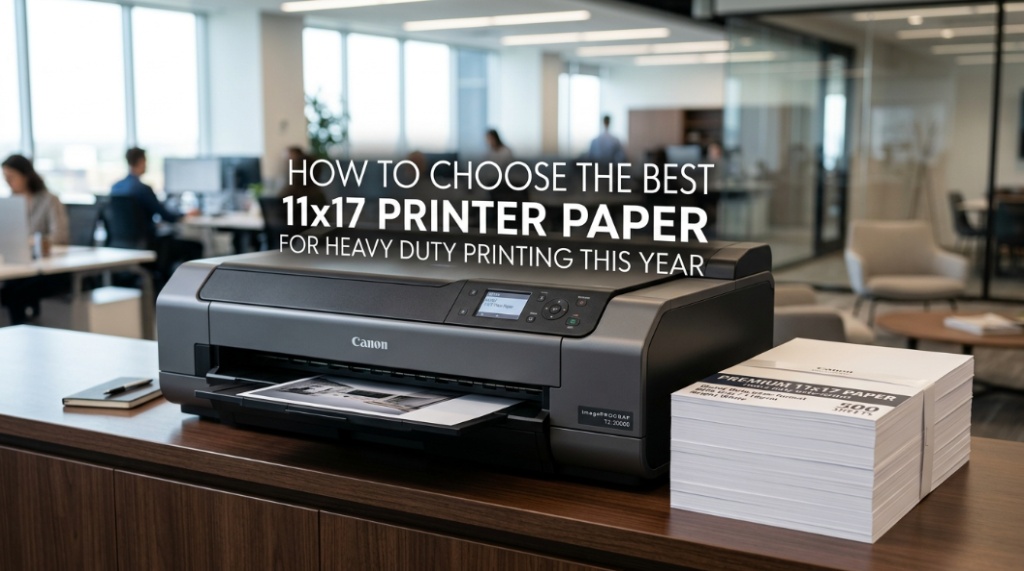
Blueprint shops, architecture firms, schools, and marketing agencies quietly waste thousands every year because they choose cheap heavy duty printing paper that curls, jams, bleeds ink, or fades after storage. If you print large spreadsheets, posters, presentations, engineering plans, menus, or catalogs, choosing proper ledger size paper matters more than most printer buyers realize.
Heavy duty printing paper refers to thicker, more durable 11×17 paper designed for high-volume printing, sharp color accuracy, reduced paper jams, and long-lasting performance. Choosing the right ledger size paper depends on paper weight, brightness, coating, printer compatibility, and intended use.
What Is 11×17 Ledger Size Paper?
11×17 ledger size paper is a large-format printing paper commonly used for presentations, engineering drawings, spreadsheets, marketing materials, and tabloid printing. It provides more printable space than standard letter paper.
Ledger size paper measures 11 inches by 17 inches. In some printing environments, it is also called tabloid paper. Businesses often use this format because it improves readability for charts, diagrams, and oversized layouts.
- Common size: 11″ x 17″
- Alternative name: Tabloid paper
- Primary use cases: Posters, CAD drawings, menus, catalogs, presentations
- Compatible with: Wide-format laser printers and inkjet printers
According to office supply market reports, demand for larger printing formats continues growing because businesses increasingly rely on visual documents, architectural layouts, and oversized data reports.
Why Does Heavy Duty Printing Paper Matter for Large Format Printing?
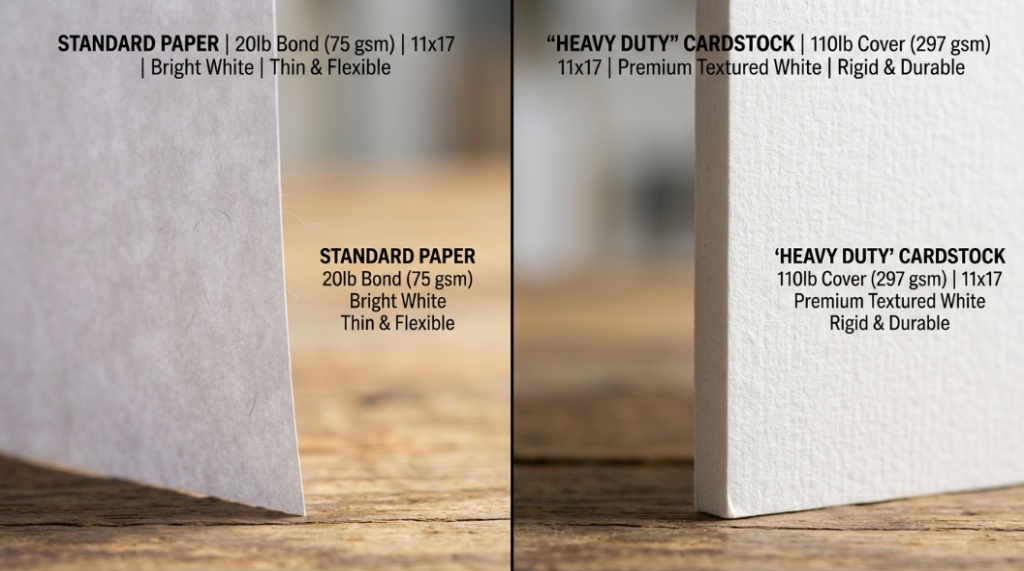
Heavy duty printing paper improves print quality, durability, feeding reliability, and long-term document preservation during high-volume printing.
Standard thin paper struggles under heavy toner coverage or saturated ink. It bends easily, causes paper jams, and often allows ink bleed-through. Heavy-duty options solve those issues by using thicker fiber construction and better surface treatment.
If your printer handles:
- Blueprint printing
- Restaurant menus
- Presentation handouts
- Marketing brochures
- Technical schematics
- Construction documents
- Educational posters
then thicker ledger size paper becomes a practical investment rather than an optional upgrade.
Low-quality paper can also damage productivity. Office studies consistently show paper jams remain one of the most common causes of printer downtime in workplaces.
Which Paper Weight Is Best for Heavy Duty Printing Paper?
The best paper weight for heavy duty printing usually falls between 28 lb and 80 lb depending on print purpose and printer compatibility.
Paper weight directly affects durability, stiffness, feel, and print performance. Many buyers mistakenly choose the heaviest option possible, but that can create feeding issues if the printer is not designed for thicker stock.
| Paper Weight | Best Use | Durability Level |
|---|---|---|
| 20 lb | Basic office documents | Low |
| 24 lb | Professional office printing | Moderate |
| 28 lb | Reports and presentations | Good |
| 32 lb | Heavy ink coverage | Very Good |
| 60–80 lb Cover | Menus, brochures, cards | Excellent |
Should You Use Thick Paper for Laser Printers?
Yes, but printer compatibility matters. Laser printers generate heat, and extremely thick paper may curl or jam if unsupported by printer specifications.
Always check:
- Maximum supported GSM
- Manual feed tray support
- Duplex printing compatibility
- Recommended media thickness
What Brightness Level Should Ledger Size Paper Have?
Brightness ratings between 92 and 100 provide sharp text clarity and vibrant color reproduction for 11×17 printing.
Paper brightness affects contrast and readability. Higher brightness creates cleaner blacks and more vivid graphics.
- 92 Brightness: Standard office printing
- 96 Brightness: Professional business printing
- 98–100 Brightness: Marketing materials and color graphics
Architectural firms and design agencies often prefer brighter paper because fine details appear sharper during client presentations.
Is Coated or Uncoated Ledger Size Paper Better?
Coated paper works better for image-heavy printing, while uncoated paper performs better for everyday office documents and writable surfaces.
Choosing between coated and uncoated stock depends entirely on print purpose.
Benefits of Coated Paper
- Sharper image reproduction
- Better color saturation
- Professional glossy appearance
- Reduced ink absorption
Benefits of Uncoated Paper
- Easier writing with pens
- Lower glare
- Better for spreadsheets and reports
- Usually more affordable
For engineering plans or school worksheets, uncoated paper typically performs better. For restaurant menus or promotional flyers, coated stock usually delivers stronger visual impact.
Which GSM Is Ideal for Heavy Duty Ledger Size Paper?
For heavy-duty 11×17 printing, 90 GSM to 160 GSM covers most professional printing needs without causing excessive printer strain.
GSM stands for grams per square meter. It measures paper density rather than thickness alone.
| GSM | Recommended Application |
|---|---|
| 75–90 GSM | Standard office use |
| 100–120 GSM | Reports and presentations |
| 130–160 GSM | Flyers and premium documents |
| 170+ GSM | Cardstock applications |
Many modern business printers comfortably support 120 GSM paper through manual feed trays.
How Do You Choose Paper for Inkjet vs Laser Printing?
Inkjet printers require absorbent paper surfaces, while laser printers require heat-resistant paper designed for toner adhesion.
This distinction matters because incorrect paper selection reduces print quality and increases maintenance issues.
Best Paper Features for Inkjet Printers
- Fast-drying coating
- Ink absorption control
- Smudge resistance
- High color accuracy
Best Paper Features for Laser Printers
- Heat resistance
- Smooth toner bonding
- Low moisture content
- Curl resistance
Using incompatible paper can cause warped pages, blurry graphics, or toner flaking.
What Are Common Uses for 11×17 Heavy Duty Printing Paper?
Ledger size paper is widely used for oversized professional documents that require readability, visual impact, and durability.
Industries using 11×17 paper include:
- Architecture
- Engineering
- Education
- Healthcare
- Construction
- Graphic design
- Retail marketing
- Restaurant management
Popular Applications
- Blueprints
- CAD drawings
- Restaurant menus
- Folded brochures
- Event posters
- Large spreadsheets
- Presentation charts
- Training manuals
Schools increasingly use ledger size worksheets because larger layouts improve accessibility and readability for students.
Does Paper Finish Affect Print Quality?
Yes, paper finish significantly impacts color reproduction, readability, glare levels, and overall document appearance.
Different finishes serve different purposes.
| Finish Type | Best For | Appearance |
|---|---|---|
| Matte | Reports and reading | Low glare |
| Glossy | Photos and marketing | High shine |
| Satin | Balanced professional use | Moderate shine |
| Uncoated | Writing and office work | Natural texture |
Glossy paper often produces stronger image contrast, but it can create reflection problems under office lighting.
How Can You Prevent Paper Jams During Heavy Printing?
Using proper paper storage, correct paper weight, and printer-compatible stock dramatically reduces paper jams.
Paper handling issues are frequently caused by moisture imbalance or improper stacking.
Best Practices for Preventing Jams
- Store paper in dry environments
- Keep unopened reams sealed
- Avoid overloaded trays
- Fan paper before loading
- Use recommended GSM levels
- Clean printer rollers regularly
Humidity remains a major factor in paper performance. Excess moisture can cause sheets to stick together during feeding.
Should You Buy Recycled Heavy Duty Printing Paper?
Yes, modern recycled ledger size paper often delivers excellent performance while supporting sustainability goals.
Recycled paper quality has improved significantly over the last decade. Many premium office paper manufacturers now offer high-brightness recycled stock suitable for laser and inkjet printing.
Benefits of Recycled Paper
- Reduced environmental impact
- Lower deforestation demand
- Corporate sustainability support
- Competitive print quality
Businesses pursuing ESG initiatives increasingly adopt FSC-certified or recycled printing paper to align with environmental policies.
What Features Should Businesses Prioritize When Buying Ledger Size Paper?
Businesses should prioritize durability, printer compatibility, brightness, bulk pricing, and long-term reliability when selecting heavy duty printing paper.
Cheap paper often creates hidden operational costs through printer maintenance, downtime, and reprints.
Key Buying Factors
- Paper weight compatibility
- Brightness rating
- Bulk packaging quality
- Coating type
- Acid-free construction
- Archival durability
- Moisture resistance
For long-term storage, acid-free paper helps prevent yellowing and document deterioration.
Which Paper Type Works Best for Double-Sided Printing?
For duplex printing, 28 lb to 32 lb paper with low show-through delivers the best results.
Thin paper often allows text and graphics to become visible from the opposite side. Heavier stock minimizes transparency and improves professional appearance.
Best Duplex Printing Features
- Low opacity show-through
- High stiffness
- Smooth feeding performance
- Minimal curl tendency
Accounting firms and schools frequently use duplex ledger printing to reduce paper usage while maintaining readability.
How Much Does Quality 11×17 Heavy Duty Printing Paper Cost?
Professional-quality ledger size paper typically costs more than standard letter paper because of increased material density and specialized manufacturing.
Pricing depends on:
- Paper weight
- Brightness
- Coating
- Brand reputation
- Recycled content
- Bulk quantity
Premium coated stock designed for marketing materials usually costs significantly more than basic office-grade ledger paper.
However, businesses often save money long term through reduced waste, fewer reprints, and improved presentation quality.

What Mistakes Should You Avoid When Choosing Ledger Size Paper?
The biggest mistakes include ignoring printer compatibility, choosing incorrect GSM, and buying based only on price.
Common Buyer Mistakes
- Using cardstock in unsupported printers
- Ignoring moisture resistance
- Buying low-brightness stock for graphics
- Using glossy paper for writable documents
- Choosing cheapest bulk options
- Ignoring paper finish compatibility
Professional printing quality depends as much on paper choice as printer quality itself.
Conclusion
Choosing proper 11×17 heavy duty printing paper is not just about thickness. It affects print clarity, durability, workflow efficiency, toner performance, and document presentation. Businesses, schools, architects, engineers, and marketers all benefit from selecting ledger size paper designed specifically for their printing demands.
For most professional environments, a balance of 28 lb to 32 lb weight, high brightness ratings, and printer-compatible coating provides strong overall performance. Businesses handling graphics-heavy projects should prioritize coated stock, while office environments often benefit more from premium uncoated paper.
Cheap paper creates hidden costs through paper jams, wasted ink, faded documents, and poor presentation quality. Investing in reliable heavy duty printing paper improves efficiency and delivers better-looking results across every print job.
If your printer regularly handles oversized documents, upgrading your ledger size paper may be one of the simplest ways to improve both print quality and workflow reliability this year.
FAQ: Heavy Duty Printing Paper & Ledger Size Paper
What size is ledger paper?
Ledger paper measures 11 inches by 17 inches. It is commonly used for spreadsheets, presentations, engineering drawings, and large-format office printing.
Is ledger paper same as tabloid paper?
Yes, ledger and tabloid paper share the same dimensions. The naming difference usually depends on printing orientation.
What paper weight is best for professional presentations?
For professional presentations, 28 lb to 32 lb paper offers strong durability, reduced bleed-through, and improved print quality.
Can all printers handle heavy duty printing paper?
No, printer compatibility varies. Always check your printer’s supported GSM or paper weight specifications before using thick paper stock.
Does thicker paper improve print quality?
Yes, thicker paper often improves color vibrancy, reduces ink bleed, minimizes curling, and creates a more professional appearance.
Which finish works best for brochures and flyers?
Glossy or satin-coated paper usually works best for brochures and flyers because it enhances image sharpness and color saturation.
How should ledger size paper be stored?
Store ledger size paper in a cool, dry environment away from humidity. Keep unopened paper sealed to maintain proper moisture balance.
📌 Related Reads
Explore: Purchasing a Home in Las Vegas: Essential Insights for a Successful Move
Learn: How to Unlock Growth Opportunities Using Adaptability and Innovation in Business




Leave a Reply