
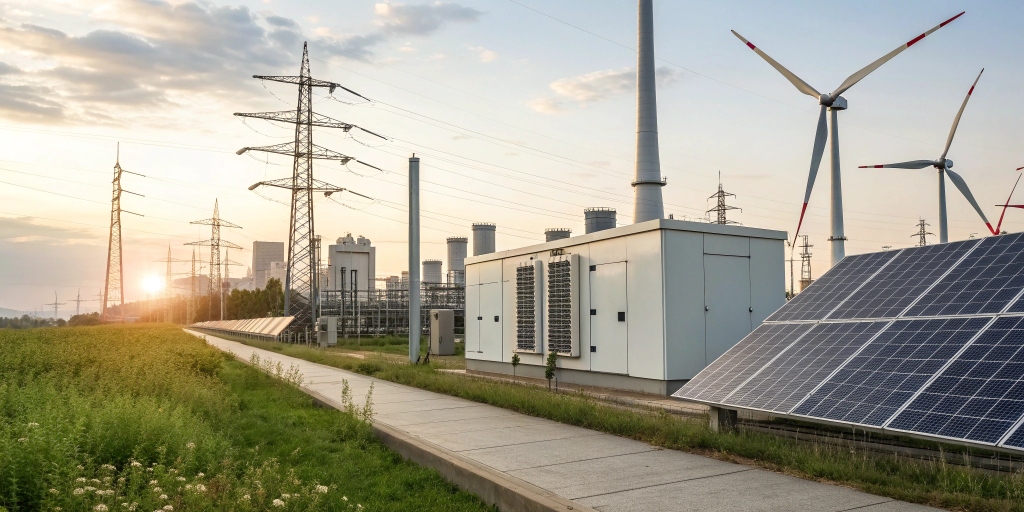
Cutting-edge advances in electrical equipment are meeting the ever-growing demand for smarter, more resilient cities and industries. From metropolitan areas seeking cleaner power to factories implementing safer automation, the lifeblood of this transformation is state-of-the-art electrical technology. As renewable energy and electrification spread, electricity generation, distribution, and usage must keep pace.
Recent innovations in intelligent networks and robust components are enhancing daily life and large-scale operations by improving efficiency, durability, and environmental sustainability. This modernization transforms energy management across various domains, from vehicles to urban grids, ensuring that systems are more reliable and adaptive. Key advancements, such as smart controls and predictive software, are paving the way for unprecedented capabilities, including wireless vehicle charging and real-time energy load management, marking a new era in electrical infrastructure.
A crucial element in this shift is the evolution of the electric motor, which underpins automation, electrified vehicles, building systems, and numerous industrial processes. The push for greater efficiency, compact designs, and advanced drive systems is helping industries transition to more innovative and greener operations.
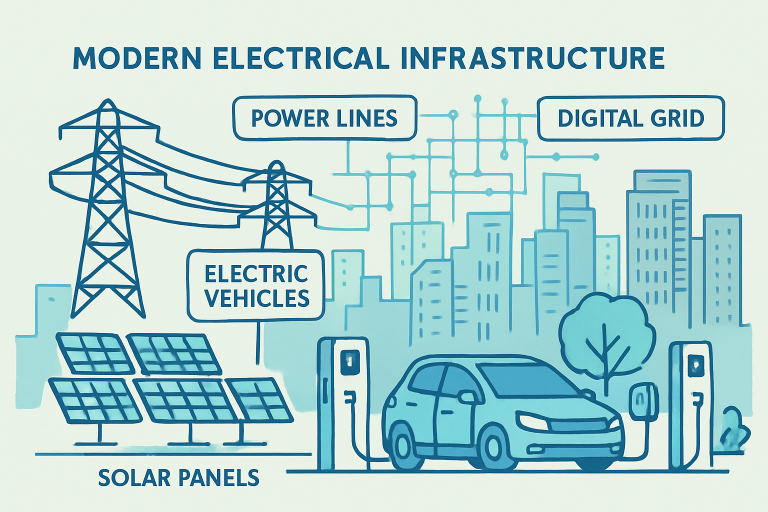
Smart Grids and Intelligent Energy Management
Smart grids are transforming the function and reliability of electrical systems. By integrating sensors, automation, and two-way digital communication, modern grids enable utilities and consumers to monitor, predict, and respond to energy demands in real-time. This integration is crucial for effectively integrating renewable resources, such as solar and wind, whose intermittent nature can create imbalances in traditional power grids.
One successful pilot, the Île d’Yeu microgrid in France, uses live data to balance supply and demand every five minutes, efficiently coordinating distributed energy resources. By leveraging smart meters, substations, and automated distribution, operators can prevent outages, shift load during peak demand, and reduce operational costs. According to the U.S. Department of Energy, these features make smart grids more resilient to both cyber and natural threats.
Wireless Power Transfer
Wireless power transfer technology, also known as inductive charging, is redefining convenience and accessibility in the world of electrification. Vehicles, medical implants, and consumer electronics now benefit from seamless power delivery without the need for direct cable connections. In the transportation sector, wireless EV charging stations enable users to recharge simply by parking over a dedicated pad, making urban charging infrastructure more user-friendly and less prone to wear and tear.
This contactless solution removes physical limitations, such as cord length or connector compatibility, and supports public safety by reducing trip hazards and exposure to electrical contacts. As industries push for faster charging times and higher efficiencies, wireless charging research—backed by entities such as the IEEE—remains at the forefront.
Electric Vehicle (EV) Charging Infrastructure
The electrification of the automotive sector is propelling the need for an expansive network of charging solutions. The International Energy Agency predicts that the number of electric vehicles globally will rise sharply, necessitating the development of residential, commercial, and ultra-fast charging hubs. Installation and ongoing maintenance of charging equipment are becoming increasingly critical tasks for licensed electricians, who are responsible for ensuring network reliability and safety.
Many cities are investing in “future-proof” infrastructure that supports not only passenger cars but also electric buses and delivery fleets. The emphasis is on robust, scalable networks that operate in conjunction with renewable power sources and incorporate intelligent management systems. Companies and public agencies alike are working to overcome challenges such as grid overload and compatibility standards, helping to fuel the mobility revolution. Addressing these challenges is key to mainstream EV adoption.
Advanced Materials Enhancing Durability
The very foundation of safer and more durable electrical equipment rests on the development of advanced materials. Engineers are replacing traditional elements with eco-friendly transformer fluids that pose lower fire risks and minimize environmental contamination. Furthermore, cores made from high-grade silicon-steel alloys enhance electromagnetic performance, extending equipment life and improving overall efficiency.
Components manufactured with specialized polymers and coatings offer resistance to harsh environments, reducing the need for frequent replacements. The trend toward sustainable designs aligns with global goals to reduce the carbon footprint of electrical infrastructure without sacrificing reliability or performance. Forbes illustrates how new material technologies are also opening doors to lightweight, high-conductivity conductors and next-gen insulation solutions for modern networks.
Digital Twins and Predictive Maintenance
Digital twins—computer-generated replicas of physical infrastructure—are unlocking new possibilities for utilities and manufacturers. These dynamic models support real-time analysis, simulations, and performance tuning before implementation or maintenance, significantly reducing the risk of failure and unexpected downtime.
Predictive maintenance, made possible by digital twins, uses data analytics and AI to forecast issues before they occur, helping organizations proactively address wear and tear, optimize asset usage, and minimize service interruptions. This is transforming routine maintenance from a costly guessing game to a science of efficiency. According to McKinsey & Company, digital twins are making infrastructure more intelligent and more resilient against unexpected disruption.
Ground-Level Power Supply Systems
Urban environments increasingly rely on ground-level power supply systems, a significant improvement over traditional overhead lines. These systems utilize conductive rails embedded in roadways to deliver electricity to vehicles, such as trams. Municipalities benefit from these solutions, as they preserve aesthetics, reduce noise, and eliminate vertical clearance issues—critical for growing, busy city centers.
The Alstom APS system, for example, powers trams in Bordeaux, seamlessly integrating with the city’s fabric while enhancing safety and reliability. As these solutions spread, cities are finding it easier to electrify public transit and reduce emissions without overhauling existing streetscapes or encumbering architecture with unsightly wires.
Conclusion
The transformation of our power infrastructure is driven by relentless innovation in electrical equipment and technology. With smart grids enabling real-time control, wireless power boosting accessibility, sustainable materials increasing longevity, and digital tools optimizing maintenance, we’re on the path to more resilient, efficient, and environmentally conscious communities. These advances aren’t just meeting today’s demands—they’re building the foundation for a sustainable and electrified tomorrow.




Leave a Reply