
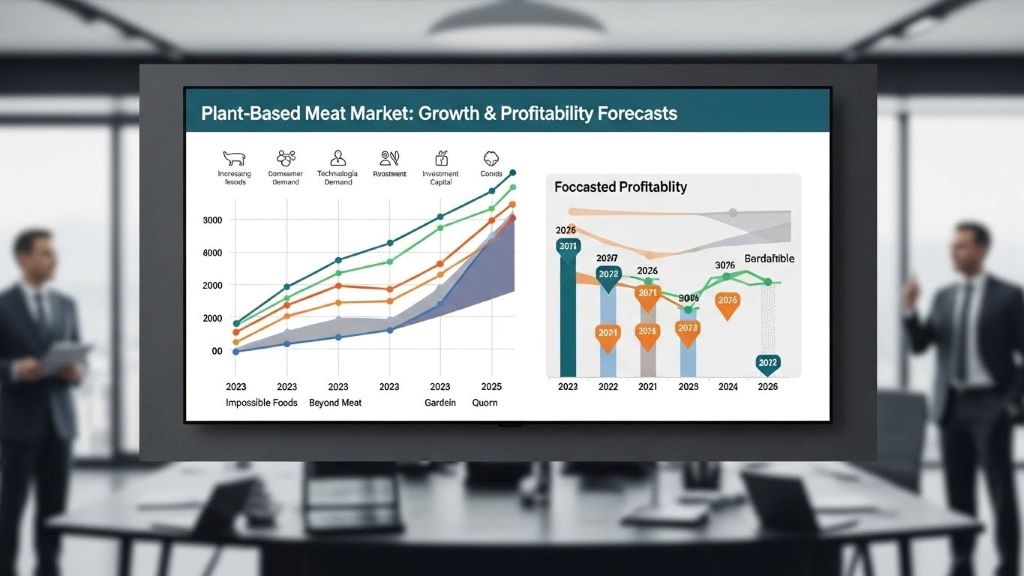
The plant-based meat industry has captured significant attention from investors worldwide. However, the path to profitability remains uncertain for many companies in this sector. Understanding the timeline for when these businesses might turn a profit is crucial for investors considering this market.
The Current State of the Plant-Based Meat Industry
The alternative protein sector has experienced remarkable growth over the past decade. Companies like Beyond Meat and Impossible Foods have become household names. Nevertheless, most publicly traded fake meat companies continue to report losses.
Market analysts observe that consumer demand has not matched initial projections. Additionally, production costs remain higher than traditional meat products. Therefore, achieving profitability has proven more challenging than many experts anticipated.
Key Players and Their Financial Performance
Beyond Meat went public in 2019 with tremendous fanfare. The stock price initially soared, creating significant excitement among investors. However, the company has consistently reported quarterly losses since its IPO.
Similarly, other plant-based protein manufacturers face comparable challenges. Revenue growth has slowed in recent quarters for several major brands. Moreover, increased competition has pressured profit margins across the industry.
Traditional meat companies have also entered this space. Their established distribution networks provide certain advantages. Consequently, startups face even stiffer competition than before.
Profitability Timeline Projections for Major Companies
Industry experts project varying timelines for when fake meat companies might achieve sustained profitability. Most analysts suggest this milestone remains several years away for many firms.
Beyond Meat’s management has indicated they expect to reach profitability by 2024 or 2025. However, external analysts remain somewhat skeptical of these projections. Market conditions and consumer preferences continue to evolve rapidly.
Smaller plant-based meat companies may require even longer periods. These businesses often lack the scale needed to reduce production costs effectively. Furthermore, they compete against both traditional meat producers and larger alternative protein brands.
Some industry observers believe consolidation will occur before widespread profitability emerges. Mergers and acquisitions could help companies achieve necessary economies of scale. Therefore, the competitive landscape may look quite different in five years.
Factors Affecting Profitability Timelines
Several critical factors will determine when fake meat companies become profitable. Production costs represent the most significant challenge currently facing this industry.
Manufacturing plant-based proteins requires specialized equipment and ingredients. These inputs often cost more than traditional meat production methods. However, technological improvements may reduce these expenses over time.
Consumer acceptance also plays a vital role in profitability projections. Market research shows that taste and price remain primary concerns for shoppers. Additionally, some consumers prefer whole food plant-based options over processed alternatives.
Distribution costs add another layer of complexity to profitability equations. Fake meat products typically require refrigeration throughout the supply chain. This requirement increases logistics expenses compared to shelf-stable items.
Regulatory environments differ across markets worldwide. Some governments provide subsidies for alternative protein development. Conversely, others maintain policies favoring traditional agriculture. Therefore, geographic expansion strategies significantly impact financial performance.
Investment Risks and Opportunities
Investing in fake meat stocks carries substantial risks that potential shareholders should carefully consider. The sector remains highly volatile with uncertain long-term prospects.
Stock prices have fluctuated dramatically for companies like Beyond Meat. According to CNBC’s coverage of Beyond Meat’s performance, shares have experienced significant declines from their peak valuations. Market sentiment can shift quickly based on quarterly earnings reports.
Nevertheless, opportunities exist for patient investors willing to accept higher risk. The global protein market represents trillions of dollars annually. Even capturing a small percentage could generate substantial returns.
Climate change concerns may accelerate consumer adoption of plant-based alternatives. Younger demographics show greater willingness to try fake meat products. Thus, demographic shifts could favor this industry over coming decades.
Technological breakthroughs might rapidly transform production economics. Advances in fermentation and cellular agriculture could dramatically reduce costs. However, predicting when such innovations will reach commercial scale remains difficult.

Market Size and Growth Projections
The alternative protein market continues expanding despite recent challenges. Research firms project steady growth through 2030 and beyond.
Global sales of plant-based meat substitutes reached approximately eight billion dollars recently. Analysts forecast this figure could double or triple within a decade. However, growth rates have decelerated from earlier projections.
North America and Europe currently dominate consumption of fake meat products. Asian markets present enormous potential for future expansion. Additionally, developing economies may leapfrog traditional meat consumption patterns.
Retail and foodservice channels show different adoption rates. Restaurants and fast-food chains have embraced plant-based options more quickly. Conversely, home cooking with fake meat products has grown more slowly.
Comparison with Traditional Meat Industry Economics
Understanding conventional meat industry economics provides useful context for profitability projections. Traditional producers benefit from decades of infrastructure investment and optimization.
Beef, pork, and poultry operations achieve profitability through massive scale. Furthermore, government subsidies in many countries support conventional agriculture. Plant-based alternatives lack these established advantages currently.
Production costs for animal protein have decreased over time through industrialization. Fake meat manufacturers hope to follow similar trajectories. However, replicating the taste and texture of meat remains technically challenging.
Consumer prices for plant-based products typically exceed conventional meat prices. This premium pricing limits market penetration among cost-conscious shoppers. Therefore, achieving price parity represents a critical milestone for industry growth.
Expert Opinions and Analyst Forecasts
Financial analysts offer mixed perspectives on fake meat stock profitability timelines. Some maintain optimistic outlooks based on long-term trends. Others express skepticism about near-term financial performance.
Bullish analysts emphasize sustainability trends and changing consumer values. They argue that younger generations will drive sustained demand growth. Additionally, they point to potential cost reductions from technological improvements.
Bearish commentators highlight consistent losses and slowing revenue growth. They question whether consumer demand justifies current market valuations. Moreover, they note intense competition from both startups and established food companies.
Bloomberg’s analysis of the plant-based meat sector indicates challenges in maintaining sales momentum. Market dynamics continue evolving as the industry matures.
Independent research organizations suggest a realistic timeframe of five to ten years for widespread profitability. This projection assumes continued technological progress and growing consumer acceptance. However, unforeseen challenges could extend this timeline significantly.
Strategic Paths to Profitability
Companies pursuing profitability employ various strategic approaches. Cost reduction through manufacturing innovation remains a top priority for most firms.
Some businesses focus on premium positioning rather than competing on price. These companies emphasize quality, taste, and sustainability attributes. Consequently, they target affluent consumers willing to pay higher prices.
Vertical integration offers another potential pathway to improved margins. Controlling more of the supply chain can reduce dependency on external suppliers. However, this strategy requires substantial capital investment.
Product diversification helps companies spread risk across multiple revenue streams. Beyond burgers and sausages, firms now offer nuggets, seafood alternatives, and other items. Additionally, some companies license their technology to other manufacturers.
Partnership strategies with traditional food companies provide access to distribution networks. These collaborations can accelerate market penetration while sharing development costs. Therefore, strategic alliances may prove crucial for smaller players.
Conclusion
The fake meat industry faces a challenging but potentially rewarding path to profitability. Most publicly traded companies in this sector continue reporting losses despite growing consumer awareness. Analysts project that widespread profitability remains several years away for many firms.
Multiple factors will influence whether these projections prove accurate. Production costs must decrease significantly to compete with traditional meat pricing. Additionally, consumer adoption rates need to accelerate beyond current trends. Technological innovations and economies of scale will prove essential for financial success.
Investors should approach this sector with caution and realistic expectations. The potential rewards are substantial if plant-based proteins capture meaningful market share. However, the risks remain considerable given uncertain consumer demand and fierce competition. A diversified investment strategy and long-term perspective seem prudent for those interested in this emerging industry.
Frequently Asked Questions
When will Beyond Meat become profitable?
Beyond Meat has suggested it expects to achieve profitability by 2024 or 2025. However, the company has not yet reached this goal, and external analysts remain cautious about these projections. Actual profitability timing depends on cost reductions and revenue growth.
Are plant-based meat companies good investments?
Plant-based meat companies carry high risk due to consistent losses and uncertain consumer demand. They may offer opportunities for risk-tolerant investors with long time horizons. However, most financial advisors recommend limiting exposure to speculative sectors like this one.
Why haven’t fake meat companies become profitable yet?
High production costs, slower-than-expected consumer adoption, and intense competition prevent profitability currently. Manufacturing plant-based proteins costs more than traditional meat production. Additionally, companies must invest heavily in marketing and product development.
How big is the plant-based meat market?
The global plant-based meat market currently generates approximately eight billion dollars in annual sales. Analysts project growth to sixteen billion dollars or more by 2030. However, growth rates have recently slowed from earlier projections.
What could make plant-based meat companies profitable faster?
Technological breakthroughs reducing production costs could accelerate profitability timelines significantly. Increased consumer acceptance and higher sales volumes would also help. Additionally, strategic partnerships or consolidation might improve operational efficiency.
Related Topics:
8 innovative marketing ideas to grow your business online
How to deal with the lower time frame trade signals




Leave a Reply