
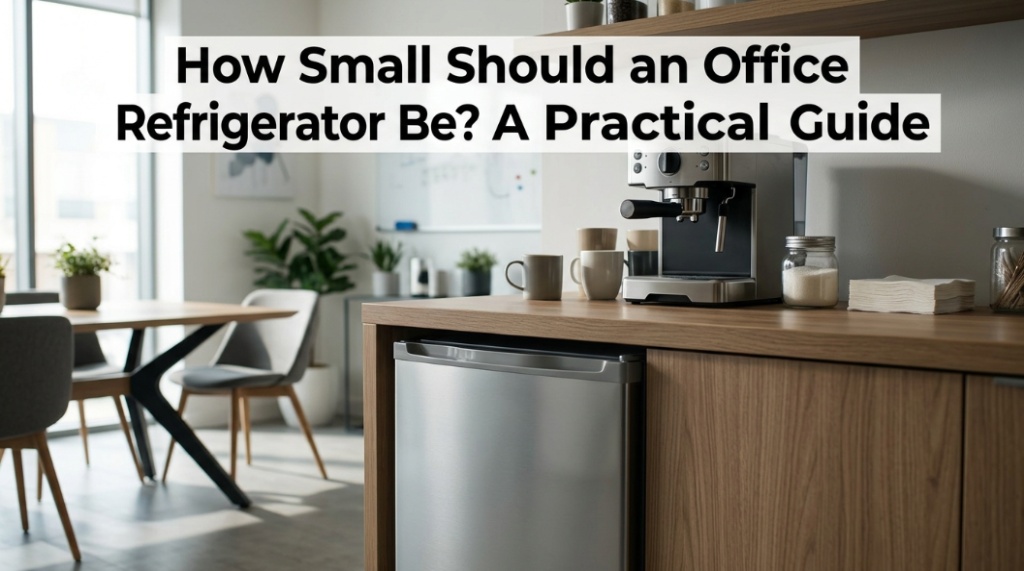
One overlooked productivity drain is not meetings, emails, or deadlines—it is employees hunting for cold water, fresh lunches, or a place to store snacks. Choosing the right small fridge for workspace environments solves that problem immediately. For most offices, a refrigerator between 3.2 and 7.5 cubic feet provides enough storage without wasting valuable floor space. The ideal size depends on employee count, available square footage, and daily food storage needs. Selecting a fridge that is too small creates clutter and frustration, while an oversized unit increases energy costs and consumes unnecessary workspace.
Many businesses underestimate how much refrigerator capacity employees actually need. A crowded fridge quickly becomes disorganised, food gets misplaced, and hygiene issues emerge. On the other hand, investing in a larger model than necessary reduces efficiency and occupies premium office real estate. Understanding refrigerator sizing helps managers balance storage capacity, energy efficiency, workplace convenience, and budget. This guide explains exactly how small an office refrigerator should be, provides sizing recommendations by team size, and highlights practical factors that influence the best choice for modern workplaces.
What Is the Ideal Size for a Small Office Refrigerator?
Direct answer: Most offices benefit from a refrigerator between 3.2 and 7.5 cubic feet, depending on the number of users and food storage requirements.
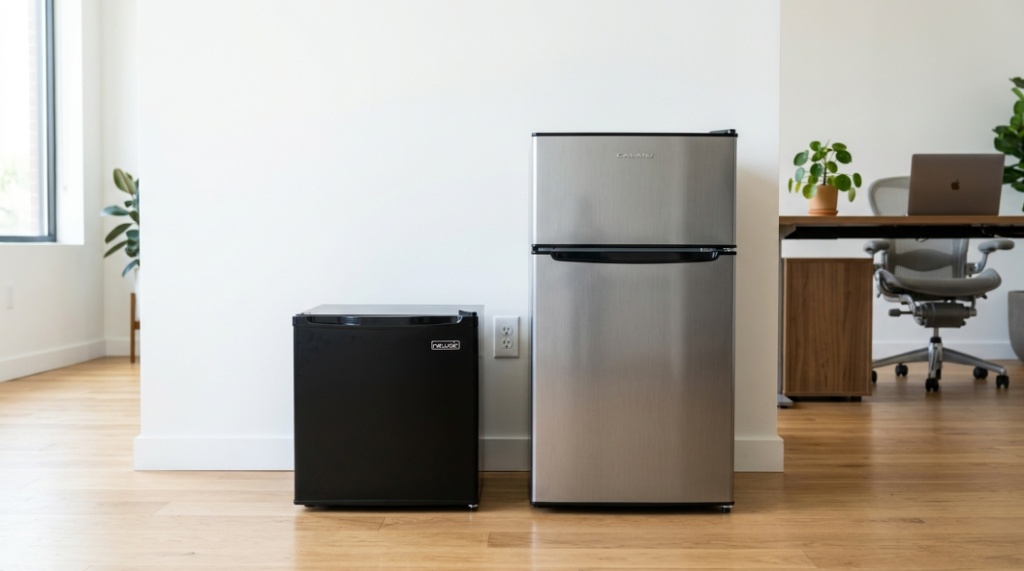
A compact office refrigerator should provide sufficient storage for drinks, lunches, snacks, and shared items without occupying excessive floor space. For individual offices or remote workstations, a mini refrigerator between 1.7 and 3.2 cubic feet is typically adequate. Small teams usually require 4.5 to 7.5 cubic feet, while larger groups often need multiple units or a full-size breakroom refrigerator.
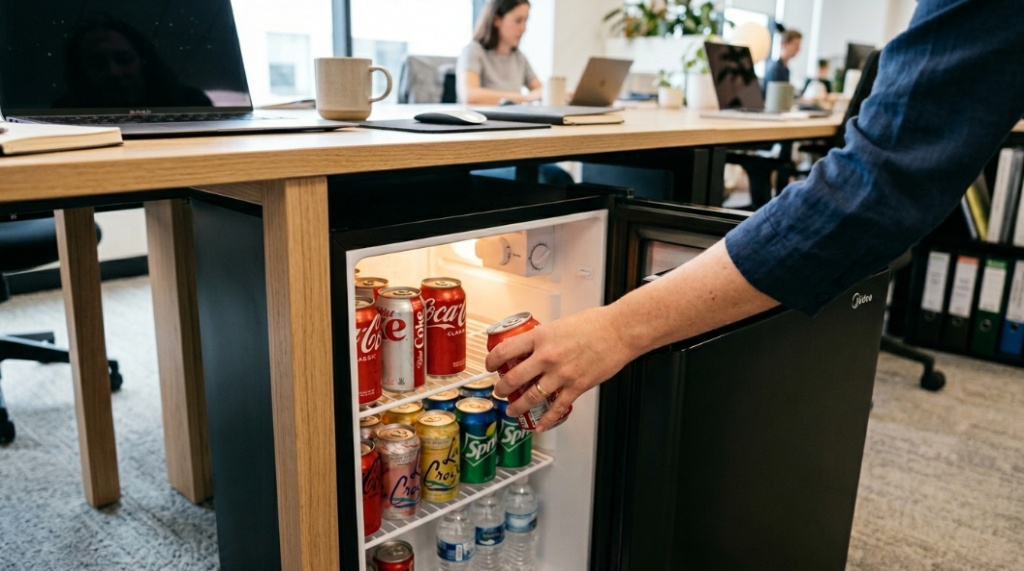
Businesses looking for practical buying recommendations can review this detailed guide covering compact refrigeration solutions designed for modern office environments before selecting a model.
Several factors influence sizing requirements:
- Number of employees
- Frequency of lunch storage
- Shared beverage inventory
- Available floor space
- Office layout
- Energy efficiency goals
- Breakroom usage patterns
Choosing capacity based solely on dimensions often leads to underestimating actual storage needs.
How Many Cubic Feet Does Each Employee Need?
Direct answer: A practical rule is approximately 0.5 to 1 cubic foot of refrigerator capacity for each regular user.
This guideline provides sufficient space for packed lunches, beverages, dairy products, fruit, and shared snacks without overcrowding.
| Employee Count | Recommended Capacity | Typical Refrigerator Type |
|---|---|---|
| 1–2 | 1.7–3.2 cu ft | Mini fridge |
| 3–5 | 3.2–4.5 cu ft | Compact refrigerator |
| 6–10 | 4.5–7.5 cu ft | Large compact model |
| 10–20 | 7.5–12 cu ft | Mid-size refrigerator |
| 20+ | 14+ cu ft | Full-size breakroom unit |
For example, a startup with six employees storing lunches daily would generally function well with a 5-cubic-foot refrigerator. Meanwhile, a consulting office where workers primarily store beverages may require less capacity.
How Small Can an Office Refrigerator Be Without Becoming Inconvenient?
Direct answer: For shared office use, refrigerators below 3 cubic feet usually become overcrowded and inconvenient.
Very compact refrigerators work well for personal offices, executive suites, reception desks, and private workstations. However, once multiple users share a unit, storage capacity disappears surprisingly fast.
A typical employee lunch can occupy:
- One meal container
- One beverage bottle
- Fruit or snacks
- Condiments or dairy products
Five employees using a 2-cubic-foot refrigerator can quickly exceed available shelf space. Overcrowding restricts airflow, reduces cooling efficiency, and increases the risk of spoiled food.
Most workplace facility managers recommend a minimum capacity of 4 cubic feet whenever more than three employees regularly access the same refrigerator.
What Refrigerator Size Works Best for Small Office Teams?
Direct answer: Small teams of 5–10 employees typically achieve the best balance with refrigerators ranging from 4.5 to 7.5 cubic feet.
This size category offers meaningful storage while maintaining a compact footprint suitable for offices, coworking spaces, creative studios, and professional service firms.
Interestingly, workplace engagement studies show that shared amenities contribute positively to employee satisfaction. Similar principles apply to breakroom design and convenience planning, much like strategies discussed in workplace participation and employee engagement initiatives that improve everyday workplace experiences.
Advantages include:
- Multiple adjustable shelves
- Dedicated beverage storage
- Vegetable crisper compartments
- Freezer sections for ice packs
- Improved energy efficiency
- Organized storage zones
These refrigerators generally fit beneath counters or within compact breakroom layouts while supporting daily employee needs.
Does Office Layout Affect Refrigerator Size Selection?
Direct answer: Yes. Available space often determines the maximum practical refrigerator size before capacity becomes the deciding factor.
Office environments vary dramatically. A downtown corporate suite may have limited breakroom square footage, while a suburban office may offer more flexibility.
Before purchasing, measure:
- Floor dimensions
- Door clearance
- Ventilation space requirements
- Counter height restrictions
- Electrical outlet locations
- Walking paths
Manufacturers commonly recommend at least one to three inches of ventilation clearance around refrigerators to ensure efficient airflow and compressor performance.
Ignoring clearance requirements can reduce cooling effectiveness and shorten appliance lifespan.
Should an Office Choose One Larger Refrigerator or Multiple Small Units?
Direct answer: Multiple small refrigerators often improve accessibility, while one larger unit simplifies maintenance and energy management.
The right approach depends on office structure.
Benefits of One Larger Refrigerator
- Lower maintenance complexity
- Centralized food storage
- Easier cleaning schedules
- Potentially lower energy consumption
- Reduced appliance purchases
Benefits of Multiple Compact Refrigerators
- Convenient access across departments
- Reduced congestion during lunch hours
- Greater flexibility for growing teams
- Backup storage if one unit fails
- Better distribution across large offices
Many growing companies install one primary breakroom refrigerator plus smaller supplemental units in employee lounges or departmental areas.
How Energy Efficient Should an Office Refrigerator Be?
Direct answer: Energy-efficient models reduce long-term operating costs and should be prioritized over minor upfront savings.
Office refrigerators run continuously. Even small efficiency improvements accumulate throughout the year.
Energy-efficient refrigerators typically provide:
- Lower electricity consumption
- Reduced operating expenses
- Improved temperature consistency
- Less environmental impact
- Long-term cost savings
According to energy efficiency programs worldwide, modern certified refrigerators can consume significantly less electricity than older models while delivering equivalent cooling performance.
Businesses evaluating office equipment investments often compare operating expenses just as carefully as initial purchase costs.
What Features Matter Most in an Office Breakroom Fridge?
Direct answer: Adjustable shelving, temperature control, easy cleaning surfaces, and organized storage compartments deliver the greatest practical value.
The best office breakroom fridge is not necessarily the largest model available. Functionality often matters more than raw capacity.
Important features include:
- Adjustable shelves
- Removable bins
- Separate freezer compartment
- LED interior lighting
- Door bottle storage
- Automatic defrost systems
- Quiet operation
- Reversible door design
Quiet performance deserves special attention in open-plan offices where appliance noise can become distracting during focused work.
Can a Mini Fridge Replace an Office Breakroom Refrigerator?
Direct answer: A mini fridge works well for individuals but rarely satisfies the needs of an entire office team.
Mini refrigerators excel in:
- Private offices
- Executive suites
- Reception desks
- Remote workspaces
- Personal workstations
However, shared office use introduces challenges:
- Limited shelf capacity
- Restricted beverage storage
- Minimal freezer space
- Increased clutter
- Poor scalability
For organizations with multiple employees, upgrading to at least a compact refrigerator usually improves convenience and employee satisfaction significantly.
How Do You Future-Proof Refrigerator Capacity for Office Growth?
Direct answer: Purchase approximately 20–30% more capacity than current needs if workforce growth is expected within the next two years.
Business expansion frequently outpaces facility planning. A refrigerator that perfectly serves eight employees today may become insufficient after a hiring surge.
Consider:
- Planned recruitment
- Department expansion
- Hybrid work policies
- Shared food programs
- Employee wellness initiatives
Companies regularly upgrading workplace resources may also evaluate adjacent office essentials such as durable printing materials, workstation supplies, and operational equipment. This guide to heavy-duty office printing materials demonstrates how capacity planning extends beyond appliances alone.
Investing slightly above current requirements often prevents premature replacement costs.
What Is the Best Small Refrigerator Size for Most Offices?
Direct answer: For most workplaces with 5–10 employees, a refrigerator between 4.5 and 7.5 cubic feet offers the ideal balance of storage, efficiency, and space utilization.
This range accommodates daily lunches, beverages, snacks, and shared items without overwhelming valuable office square footage.
It also provides flexibility for occasional storage surges during meetings, employee events, celebrations, and collaborative projects.
Conclusion
Choosing the right office refrigerator size is less about finding the smallest possible appliance and more about matching storage capacity to workplace needs. For individual users, a mini fridge between 1.7 and 3.2 cubic feet may be sufficient. Small teams generally benefit from 4.5 to 7.5 cubic feet, while larger organizations often require bigger breakroom solutions or multiple units.
The best small fridge for workspace settings balances employee convenience, energy efficiency, floor space utilization, and future growth requirements. Businesses that plan capacity carefully reduce clutter, improve workplace organization, and create a more functional breakroom experience. If you are evaluating office equipment upgrades, reviewing practical workspace solutions and ergonomic planning resources can help create a more productive environment overall.
Assess your employee count, storage habits, and available square footage today, then choose a refrigerator size that supports both current operations and future growth. A properly sized refrigerator is a small investment that delivers daily value across the entire workplace.
Frequently Asked Questions
How big should an office refrigerator be for five employees?
A refrigerator between 4 and 5 cubic feet is typically sufficient for five employees storing lunches, beverages, and snacks during regular workdays.
Is a 3.2-cubic-foot refrigerator enough for shared office use?
It can support two to three users comfortably, but larger teams often experience overcrowding. Shared offices generally perform better with at least 4 cubic feet of capacity.
What is the most space-efficient office refrigerator size?
Models between 4.5 and 5.5 cubic feet provide an excellent balance between storage volume and floor space efficiency for small business environments.
Should every department have its own refrigerator?
Not necessarily. Smaller offices usually function well with one central breakroom refrigerator. Larger workplaces may benefit from multiple compact units distributed across departments.
How much refrigerator space does one employee need?
Most employees require approximately 0.5 to 1 cubic foot of storage capacity, depending on lunch habits, beverage consumption, and shared food programs.
Are mini fridges energy efficient?
Many modern mini refrigerators are highly efficient. However, efficiency varies by model, age, insulation quality, and compressor technology.
How long does a typical office refrigerator last?
With proper maintenance, a quality office refrigerator commonly lasts between 10 and 15 years before replacement becomes necessary.




Leave a Reply