
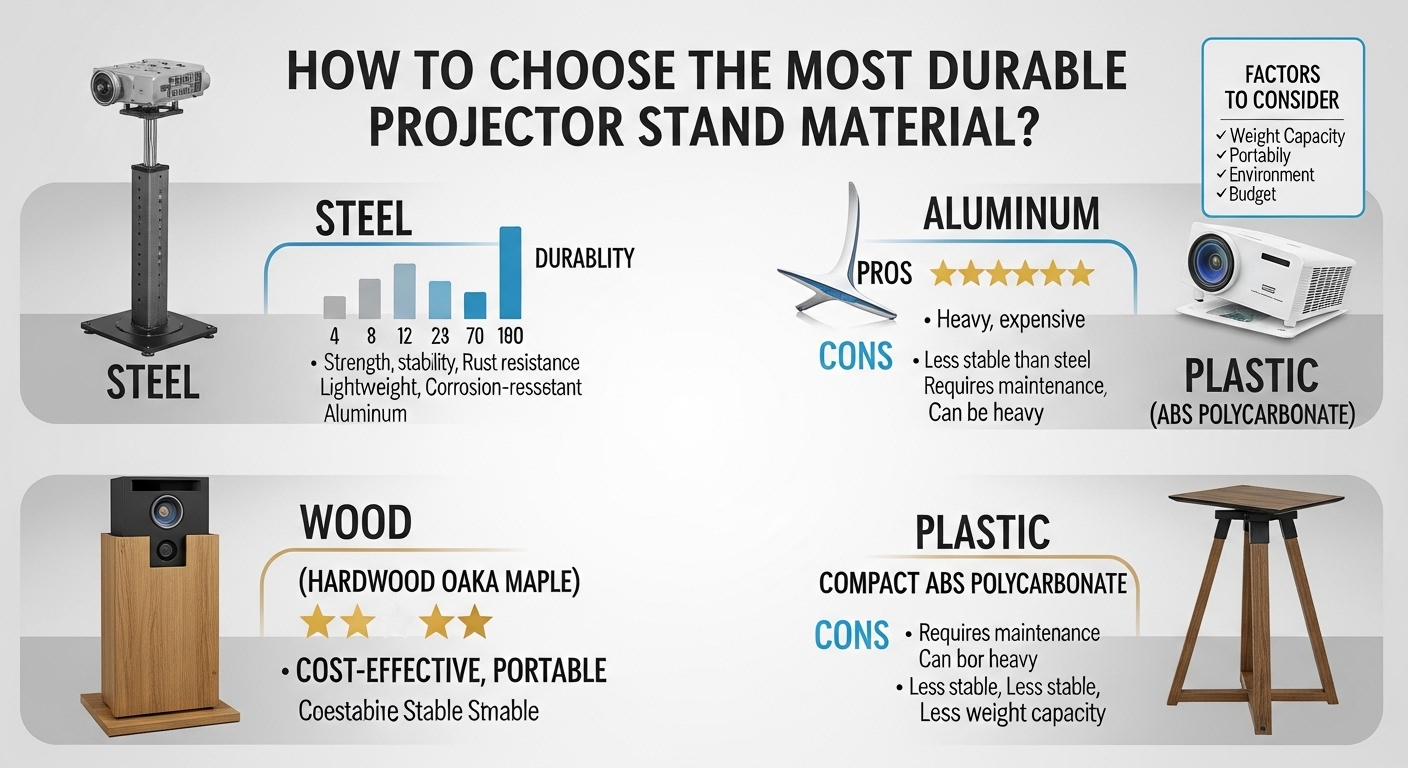
Steel is the most durable material for a projector stand due to its higher strength, load capacity, and resistance to bending. Aluminum is lighter and corrosion-resistant but less rigid under heavy loads.
Choosing the right projector stand material is not just about looks or price—it directly affects stability, safety, and long-term performance. Imagine setting up your projector for an important presentation or home theater night, only to have the stand wobble or fail. That’s a costly and frustrating problem.
This guide breaks down the real differences between aluminum vs steel stands, focusing on durability, build quality comparison, and practical use cases. You’ll get data-backed insights, real-world scenarios, and clear answers to help you make the right decision.
If you want a stand that lasts for years without compromising safety, this article will help you decide with confidence.
Why Does Material Matter in a Projector Stand?
Short answer: The material determines load capacity, stability, lifespan, and resistance to wear.
Most buyers overlook material and focus on design or price. That’s a mistake. The material directly impacts how the stand performs under real conditions.
- Load capacity: Heavier projectors need stronger materials.
- Stability: Weak materials bend or wobble.
- Durability: Frequent setup and transport wear down cheap builds.
- Safety: Poor material increases the risk of collapse.
In short, the wrong material leads to instability, while the right one ensures long-term reliability.
Aluminum vs Steel Stand: Which Is More Durable?
Short answer: Steel stands are more durable, while aluminum stands are more portable.
| Feature | Aluminum Stand | Steel Stand |
|---|---|---|
| Weight | Lightweight | Heavy |
| Strength | Moderate | High |
| Durability | Good | Excellent |
| Corrosion Resistance | High | Moderate (needs coating) |
| Portability | Easy to carry | Less portable |
| Load Capacity | Lower | Higher |
Key takeaway: If durability is your top priority, steel wins. If portability matters more, aluminum is a better choice.
What Makes Steel Stands More Durable?
Short answer: Steel has higher tensile strength and resists bending under heavy loads.
Steel is widely used in construction for a reason—it can handle stress without deforming. The same principle applies to projector stands.
- Higher tensile strength: Steel can handle more weight without breaking.
- Better rigidity: Less wobbling during use.
- Long lifespan: Resistant to repeated stress cycles.
Case insight: In event setups, steel stands are preferred for projectors weighing over 5–10 kg. Rental companies report fewer failures and longer usage cycles compared to aluminum models.
This makes steel the go-to option for professional environments.
When Is Aluminum a Better Choice?
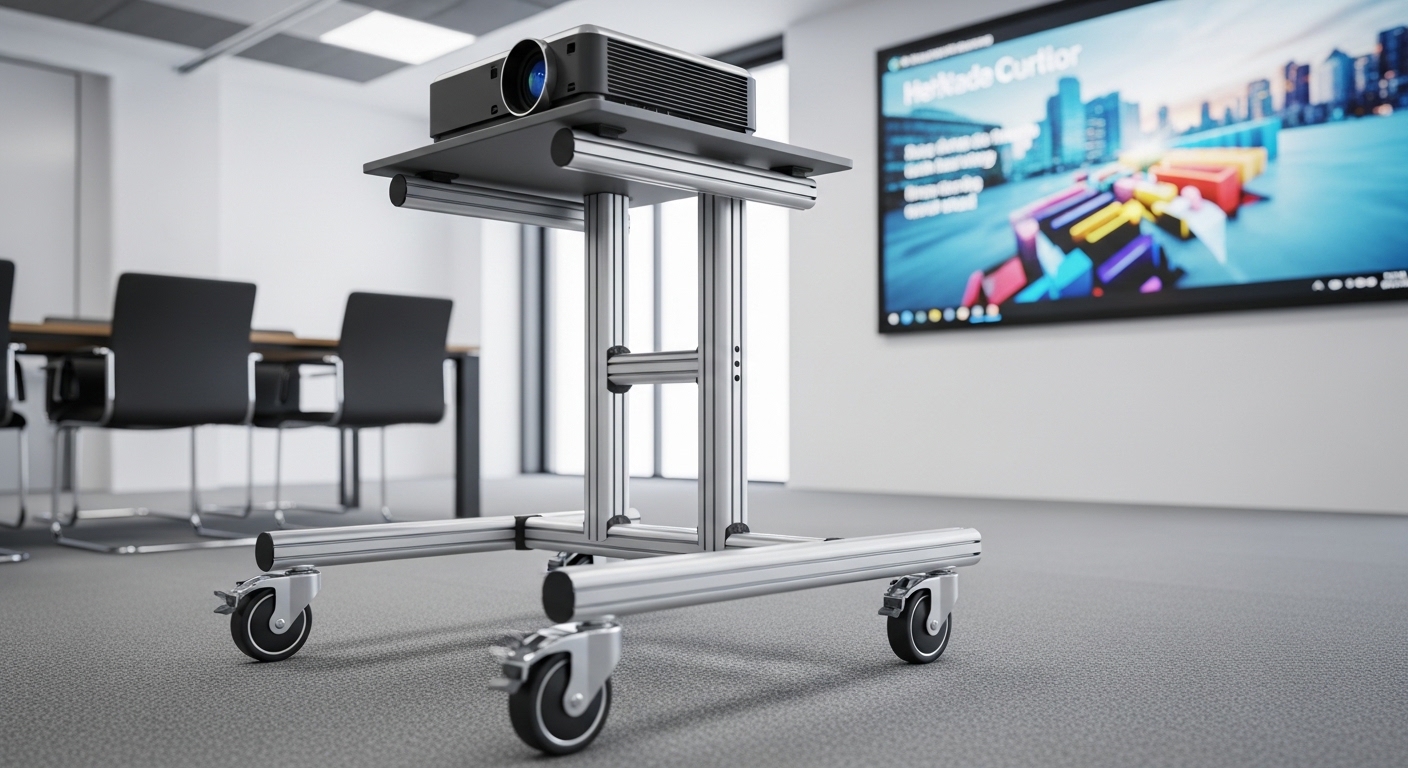
Short answer: Aluminum is ideal when portability and corrosion resistance are more important than maximum strength.
Aluminum stands are not weak—they are just optimized differently.
- Lightweight design: Easier to transport and set up.
- Rust resistance: Ideal for humid environments.
- Quick adjustments: Better for mobile users.
Real-world use: Content creators, trainers, and freelancers often choose aluminum stands because they move frequently between locations.
If your projector is lightweight and you travel often, aluminum makes sense.
How Does Build Quality Affect Durability?
Short answer: Build quality can matter as much as material.
Two steel stands are not always equal. Manufacturing quality plays a big role.
Key Build Quality Factors:
- Joint strength: Weak joints fail before the material does.
- Welding quality: Poor welds reduce lifespan.
- Surface coating: Prevents rust and wear.
- Base design: Wider bases improve stability.
Example: A low-quality steel stand with poor welding may fail faster than a high-quality aluminum one. Always check reviews and specifications.
What Load Capacity Should You Look For?
Short answer: Choose a stand with at least 2x your projector’s weight capacity.
This safety margin prevents stress on the structure.
- Projector weight: 3 kg → Stand capacity: 6 kg+
- Projector weight: 8 kg → Stand capacity: 15 kg+
Why this matters: Overloading reduces lifespan and increases failure risk.
Steel stands typically support higher loads, making them safer for heavier equipment.
How Does Portability Impact Your Choice?
Short answer: If you travel frequently, aluminum is more practical.
Weight becomes a major factor when moving equipment daily.
- Aluminum: Easy to carry, faster setup
- Steel: Stable but heavier
Scenario: A traveling presenter may sacrifice some durability for convenience, while a fixed home setup benefits more from steel stability.
Is Corrosion Resistance Important?
Short answer: Yes, especially in humid environments.
Aluminum naturally resists corrosion, while steel requires protective coatings.
- Aluminum: Forms a protective oxide layer
- Steel: Needs powder coating or paint
In regions with high humidity, aluminum may last longer without maintenance.
What Does Real-World Usage Data Say?
Short answer: Steel stands last longer under heavy use, while aluminum performs well in light-duty scenarios.
Case study insight: Event rental companies report:
- Steel stands last 3–5 years under heavy usage
- Aluminum stands last 2–3 years with frequent transport
- Failure rate is higher in aluminum when overloaded
This data highlights the importance of choosing based on usage intensity.
How to Choose Based on Your Use Case?
Short answer: Match the material to your usage scenario.
Choose Steel If:
- You have a heavy projector
- You want maximum durability
- The setup is mostly stationary
Choose Aluminum If:
- You travel frequently
- Your projector is lightweight
- You need quick setup and portability
This approach ensures you don’t overpay or underperform.
What Mistakes Should You Avoid When Buying?
Short answer: Avoid choosing based only on price or appearance.
- Ignoring load capacity ratings
- Choosing lightweight stands for heavy projectors
- Overlooking build quality
- Not checking user reviews
These mistakes lead to instability and frequent replacements.
Conclusion: Which Material Should You Choose?
Choosing the most durable projector stand material comes down to one thing—your usage.
If you want strength, long-term reliability, and maximum stability, steel is the clear winner. It handles heavier loads, resists bending, and lasts longer under stress.
If your priority is portability, ease of setup, and corrosion resistance, aluminum is a smart alternative. It’s lighter, easier to carry, and perfect for mobile setups.
The key is not to guess. Match the material to your needs. Think about weight, frequency of use, and environment.
Call to Action: Before buying your next projector stand, check the load capacity, material quality, and real user reviews. A small upfront decision can save you years of frustration and extra cost.
Frequently Asked Questions (FAQs)
Is steel always better than aluminum for projector stands?
Short answer: Not always. Steel is stronger, but aluminum is better for portability and corrosion resistance.
How long does a projector stand typically last?
Short answer: Steel stands last 3–5 years under heavy use, while aluminum lasts 2–3 years depending on usage.
Can aluminum stands hold heavy projectors?
Short answer: Yes, but only within their load capacity. Overloading can cause bending or failure.
What is the safest load capacity to choose?
Short answer: At least double your projector’s weight for safety and durability.
Do steel stands rust easily?
Short answer: Not if they have proper coating like powder finish or paint.
Are expensive stands always more durable?
Short answer: Not necessarily. Build quality and material matter more than price alone.
Which material is best for outdoor use?
Short answer: Aluminum is better due to natural corrosion resistance.
Read More Also: How to Choose Projector Screens for Bright Office Environments
Find out: How to Improve Business Meetings with the Right Projector




Leave a Reply